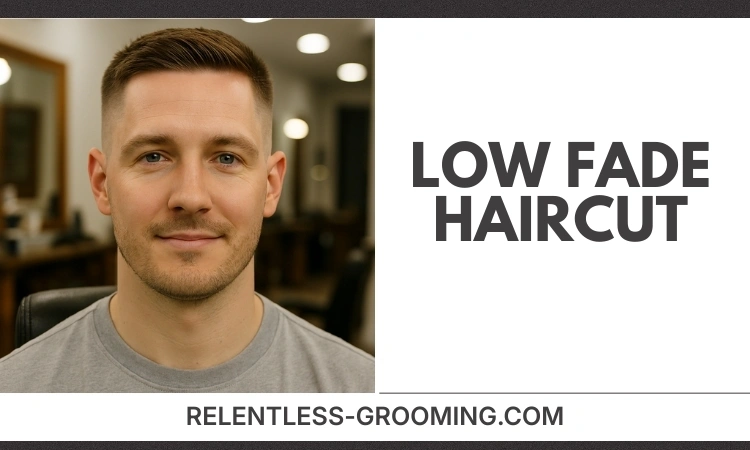
In the modern world, where men are looking for a versatile foundation. The low fade haircut is a clean, modern style. The hair on the sides that tapers down above the ears to the neckline is what defines it. Although the top stays longer. This length gives amazing styling freedom.
You can define cuts, show blowouts, or even textured looks. This fade is magical as it creates a subtle blend and a sharp outline that frames the face, with no harsh contrast.
An ideal style for all hair types and popular among guys who want a polished look. This is a timeless and trendy edge style with a barbershop fresh look.
Contents
- 1 A. Classic & Core Variations
- 2 B. Top-Heavy or Styled Variation Combos
- 3 C. Textured & Modern Variations
- 4 D. Edgy & Statement Variations
- 4.1 1. Low Fade with Design (Etched/Art Line)
- 4.2 2. Low Fade Mohawk / Faux Hawk
- 4.3 3. Disconnected Low Fade
- 4.4 4. Low Fade with Beard Blend
- 4.5 5. Low Fade with Undercut
- 4.6 6. Low Fade Crew Cut
- 4.7 7. Low Taper with Caesar Cut
- 4.8 8. Low Burst Taper Variant
- 4.9 9. Low Taper with Square Crown
- 4.10 10. Textured Mop Top Low Fade
- 4.11 11. Low Taper with Side Sweeper
- 4.12 12. Low Taper with Straight Slick Back
- 5 Here’s what separates a good fade from a great one?
- 6 How to Ask Your Barber for the Right Low Fade Haircut?
- 7 Conclusion
- 8 FAQs About Low Fade Haircuts
A. Classic & Core Variations
Start with a base that creates your foundation. The low fade is the art of perfect transition. These styles may not be loud, but very powerful. Starting from the bottom, these designs create a clean and sharp look, making everything else on top look better.
1. Classic Low Fade
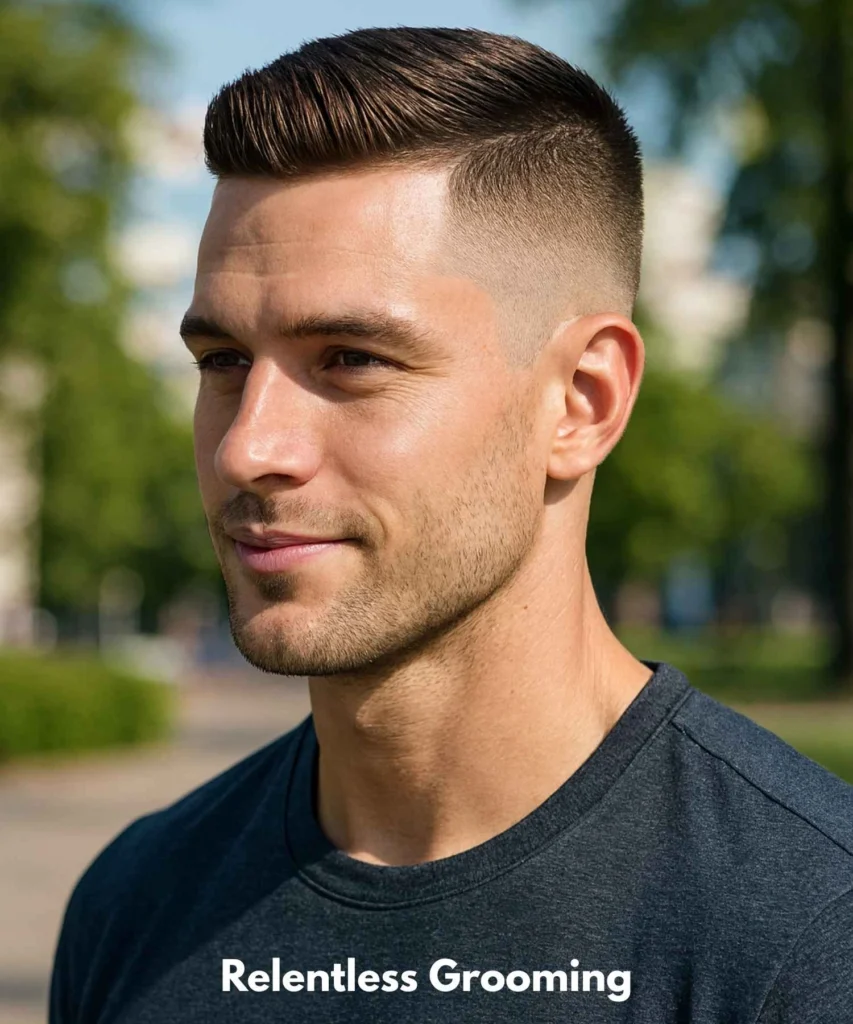
This is the essential, trustworthy foundation. The fade begins neatly above the ear, creating a smooth and gradual shift in length that is noticeable but never dramatic. It feels polished, professional, and universally sharp.
Barber Instructions: Ask for a classic low fade. The blend should start just above the ear and temple, creating a gentle gradient about two inches high. Keep the top full for contrast.
Product Tip: Use a light styling cream. Apply to towel-dried hair to add light control and a natural, healthy-looking shine, not greasy.
2. Low Taper Fade
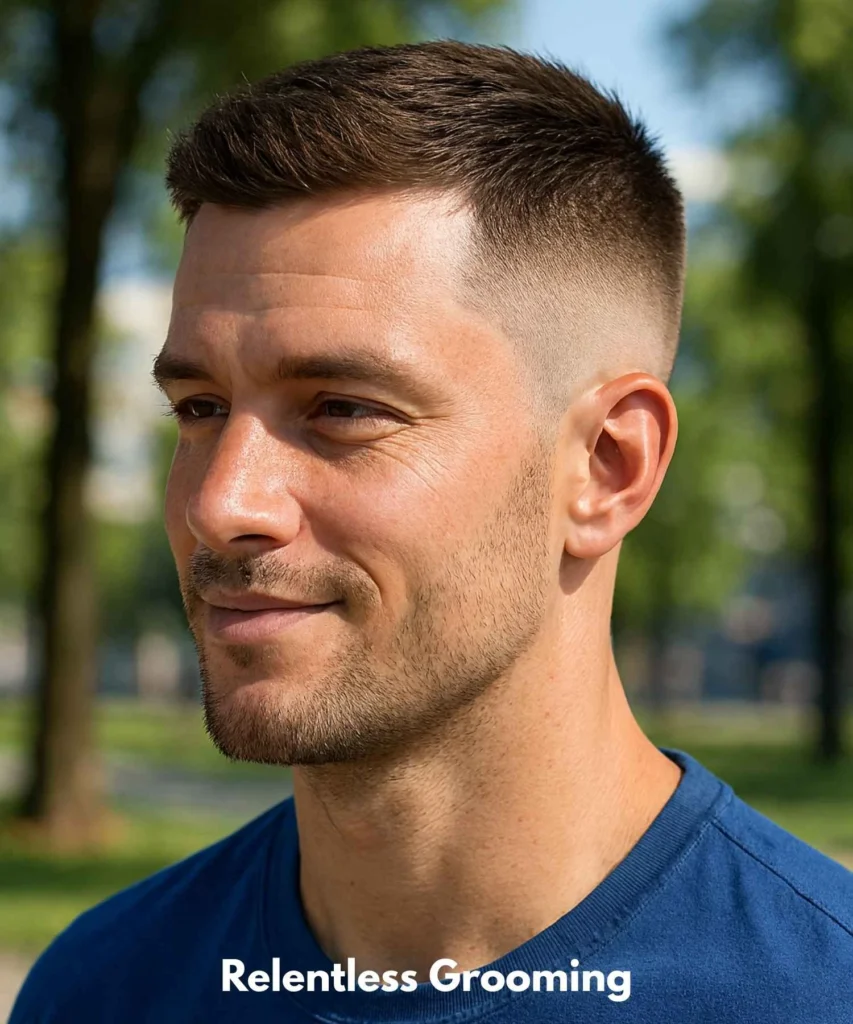
This is the most subtle and refined approach. Instead of a stark fade, the hair is merely tapered shorter around the ears and neckline for a clean, “lived-in” finish. It feels sophisticated, effortless, and impeccably neat.
Barber Instructions: Ask for a low taper. The hair should be scissor-tapered shorter around the ears and the back of the neck, blending seamlessly without a visible fade line.
Product Tip: Use a texturizing paste. Work a small amount through the ends of your hair to enhance separation and maintain a perfectly tidy, natural shape.
3. Very Low Fade
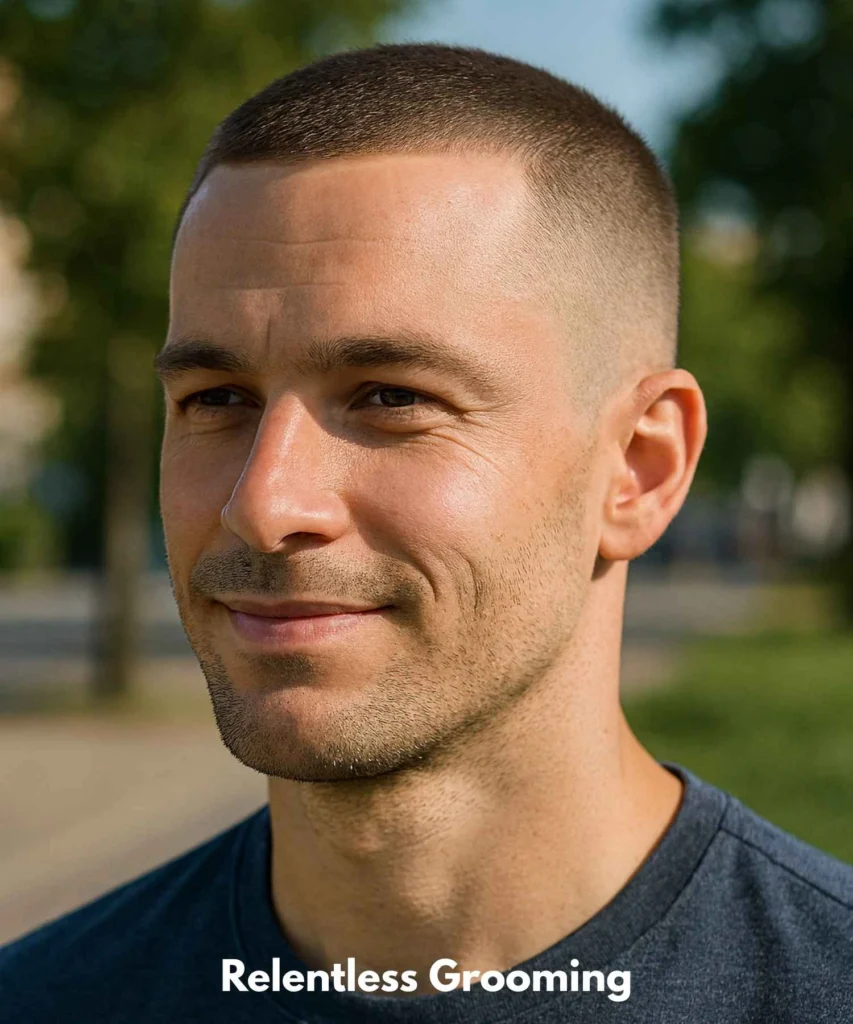
This is the master class in subtlety. The fade is kept extremely low and tight to the skin, revealing just a whisper of gradient. It is a minimalist statement that prioritizes a clean outline over obvious contrast.
Barber Instructions: Ask for a very low fade. The blend should start and finish just above the earlobe, creating the shortest possible gradient for a crisp outline.
Product Tip: Use a matte pomade. A tiny dab rubbed between your palms will tame flyaways and give the faded sides a clean, powdered finish.
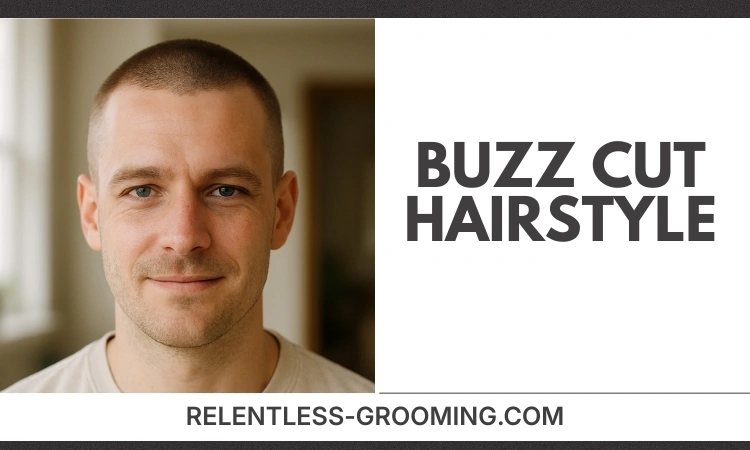
Want a sharp, modern haircut that’s effortless to maintain while still making a strong style statement?
modern buzz cut styles for men4. Low Skin Fade
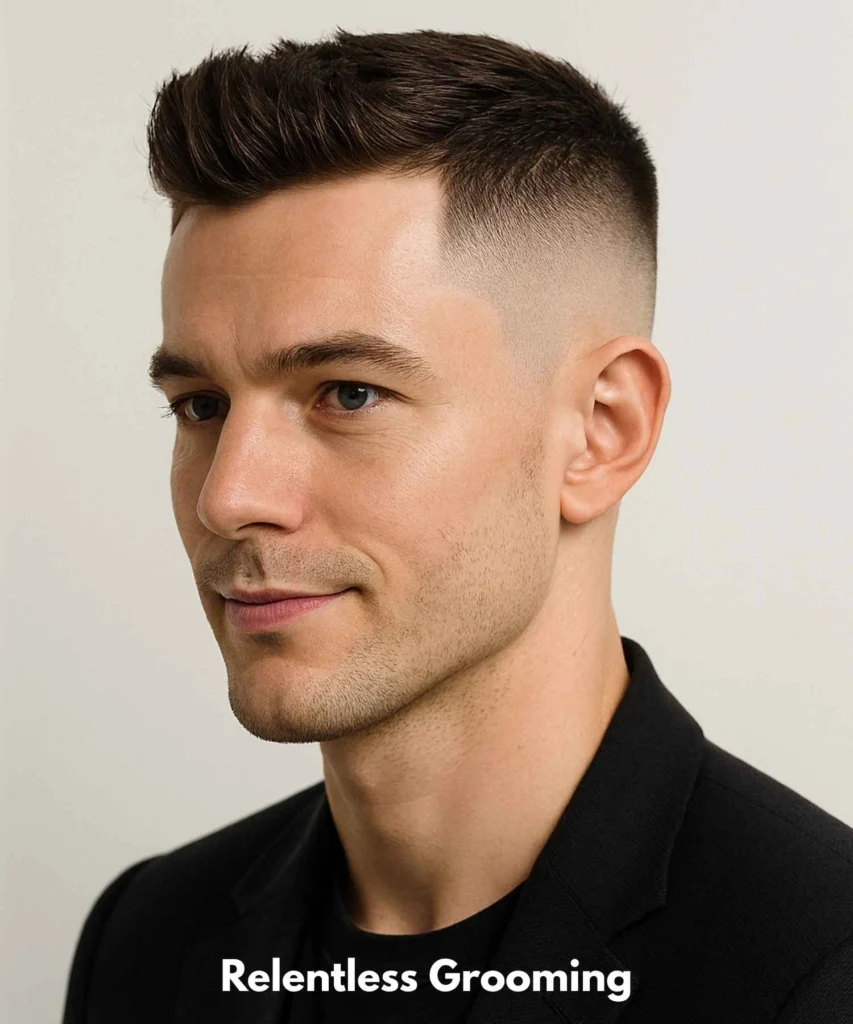
This style introduces a striking, sharp contrast. The hair fades all the way down to bare skin at the bottom, creating a clear, definitive line that highlights the shape of your head. It feels bold, modern, and meticulously detailed.
Barber Instructions: Ask for a low skin fade. The barber will use a razor or close trimmer to bring the hair to skin level around the ears and neck, with the fade beginning immediately above it.
Product Tip: Use a protective aftershave balm on the skin, then a strong-hold matte clay on the longer hair for definition against the sharp fade.
5. Low Drop Fade
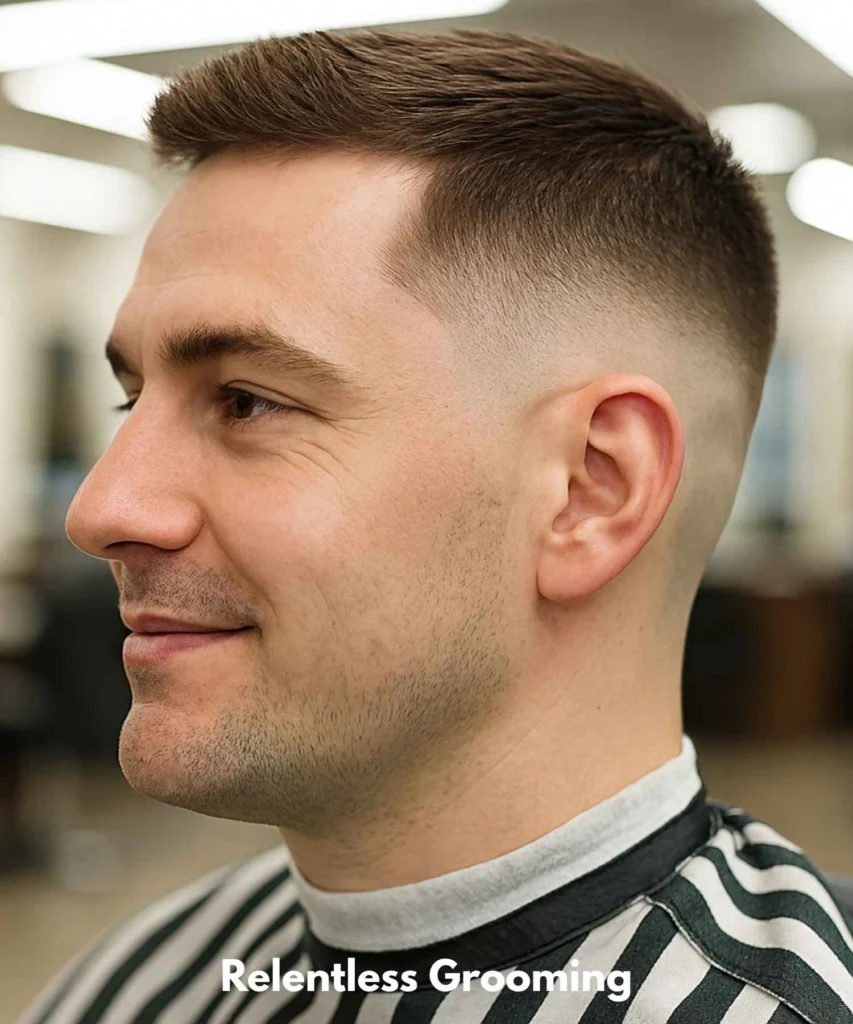
This is a dynamic, shape-conscious cut. The fade line follows the natural curve behind your ear, dipping downward to accentuate your head’s contours. It adds a touch of tailored drama to the classic silhouette.
Barber Instructions: Ask for a low drop fade. Specify that you want the fade line to curve downward, following the natural dip behind the ear, before tapering out.
Product Tip: Use a medium-hold pomade. It provides enough control to style the top while keeping the precise lines of the dropped fade looking intentional.
6. Low Shadow Fade
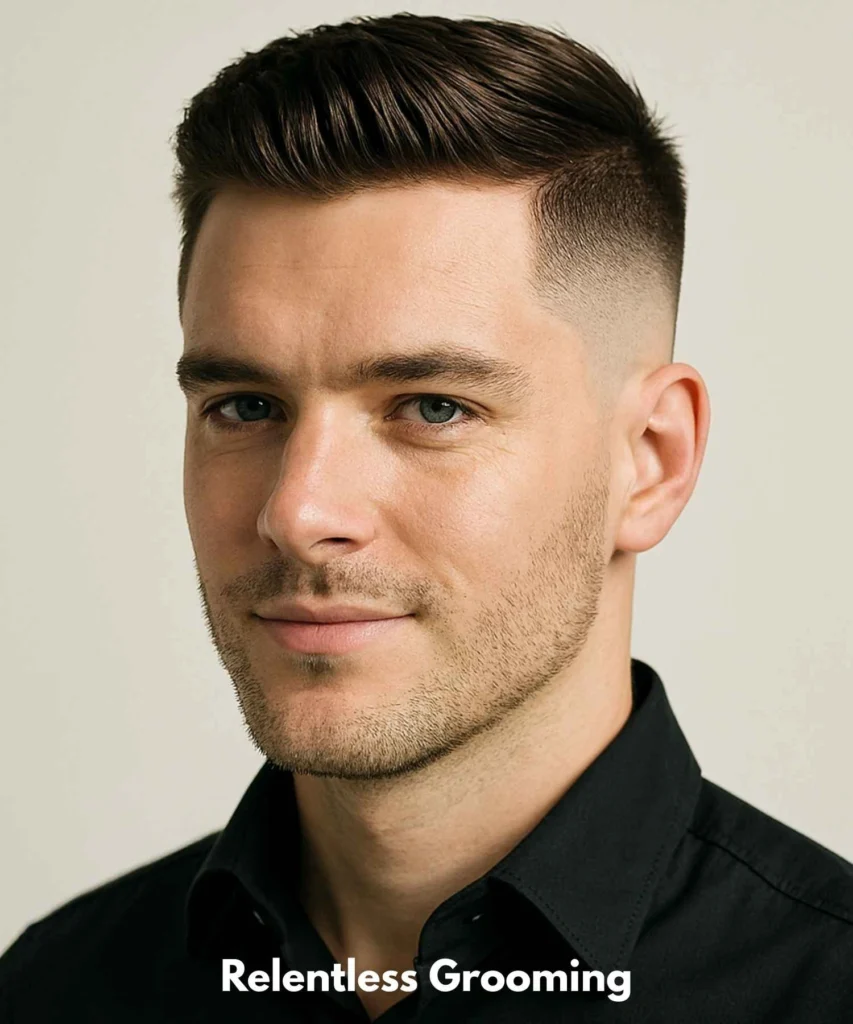
This look is all about soft, blurred perfection. The transition from dark to light is so seamless that it looks like a soft shadow on your skin. It creates depth and dimension with an exceptionally gentle hand.
Barber Instructions: Ask for a low shadow fade. Emphasize you want no hard lines; the blend should be so smooth it looks like a gradient shadow, not a distinct haircut line.
Product Tip: Use a light hair oil or serum. A single drop smoothed over the faded area can enhance the shadow effect with a subtle, healthy sheen.
7. Low Buzz Fade
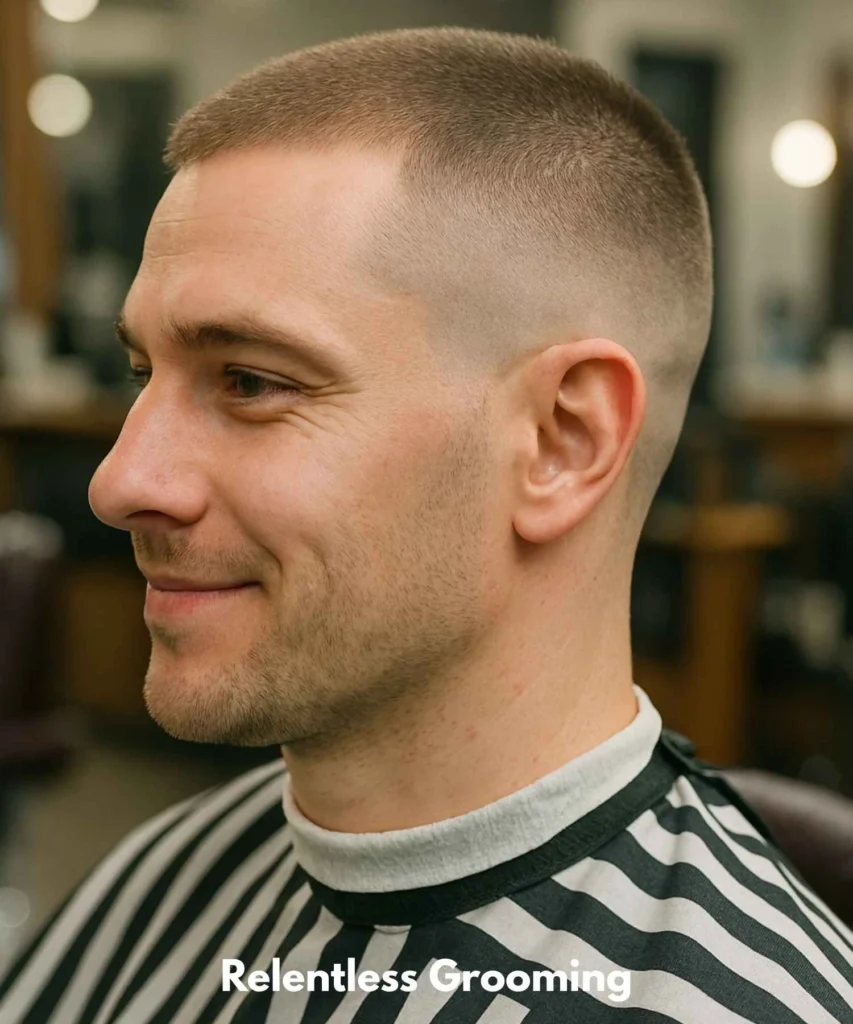
This is the ultimate in low-maintenance, masculine style. It pairs the uniform, short length of a buzz cut with the sharp detail of a low fade, creating a look that is both rugged and refined.
Barber Instructions: Ask for a low buzz fade. Request a consistent buzz cut length on top, with a low fade starting around the temples and ears.
Product Tip: Use a non-greasy moisturizer or lightweight beard oil on the buzzed sections to keep the skin and hair feeling healthy and looking sharp.
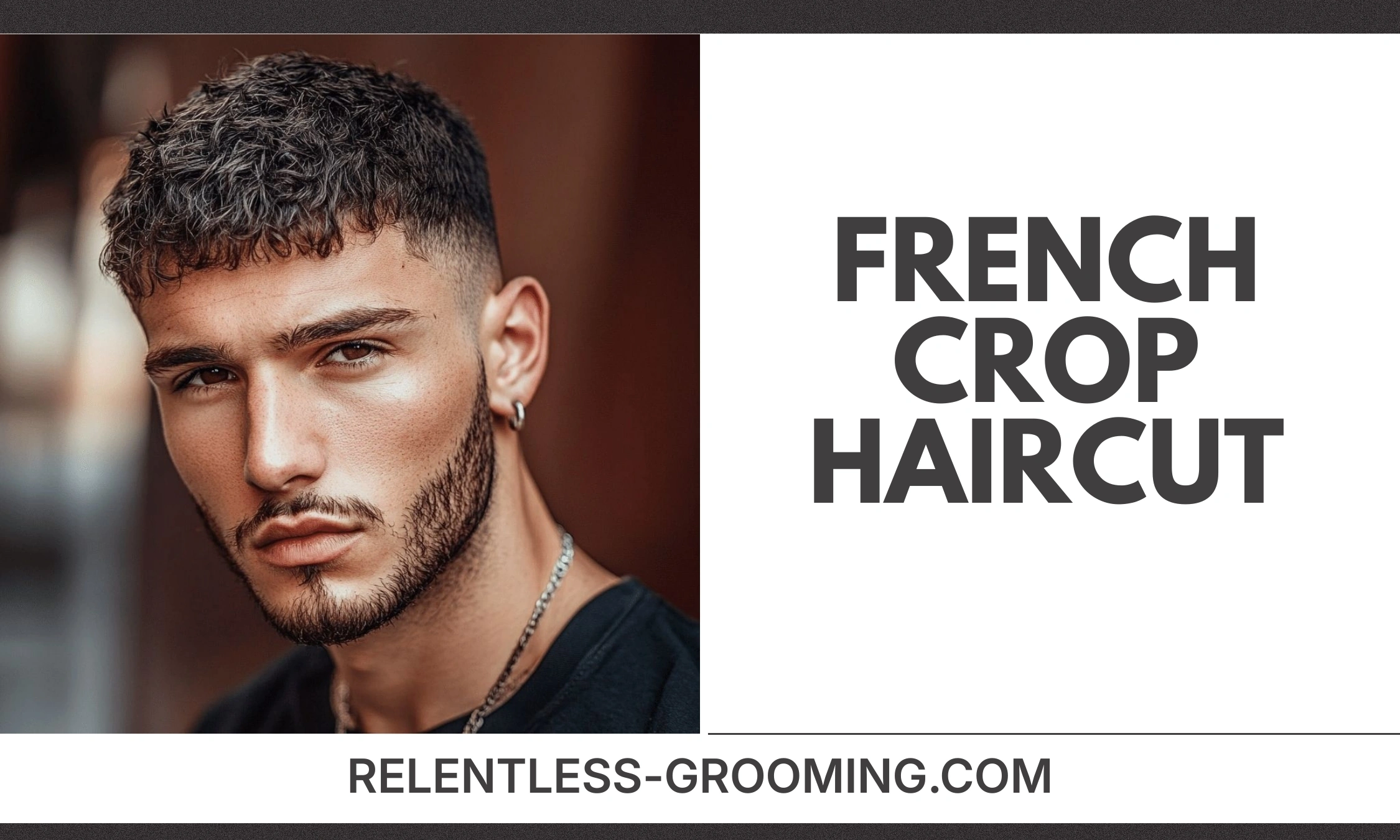
Want a sharp, modern haircut that delivers texture, structure, and effortless everyday style?
modern French crop haircut styles for menB. Top-Heavy or Styled Variation Combos
This style creates a crown foundation that allows a personality to take the stage. The low fade is a clean canvas for these staples to make a sharp foundation. This is a powerful combination of disciplined, expressive, styled hair.
1. Low Fade Pompadour
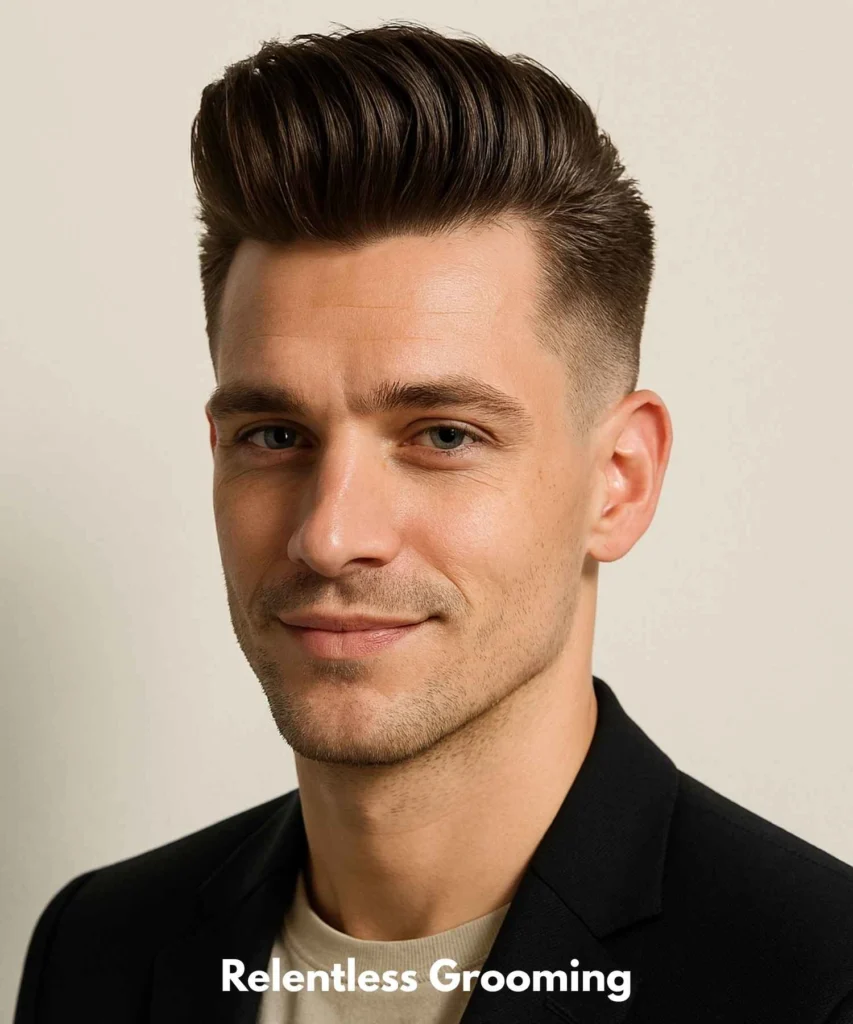
This is a statement of bold, retro-inspired elegance. It pairs the dramatic, vertical volume of a pompadour with the ultra-clean sides of a fade, creating a striking silhouette of contrast and height.
Barber Instructions: Ask for a low skin fade or classic low fade. Leave substantial length and weight on top, specifically at the front, to allow for the high, rolled-back sweep of the pompadour.
Product Tip: Use a strong-hold pomade or styling gel. Apply to damp hair, comb back, and use a blow-dryer with a round brush to build height at the roots before setting the shape.
2. Low Fade Quiff
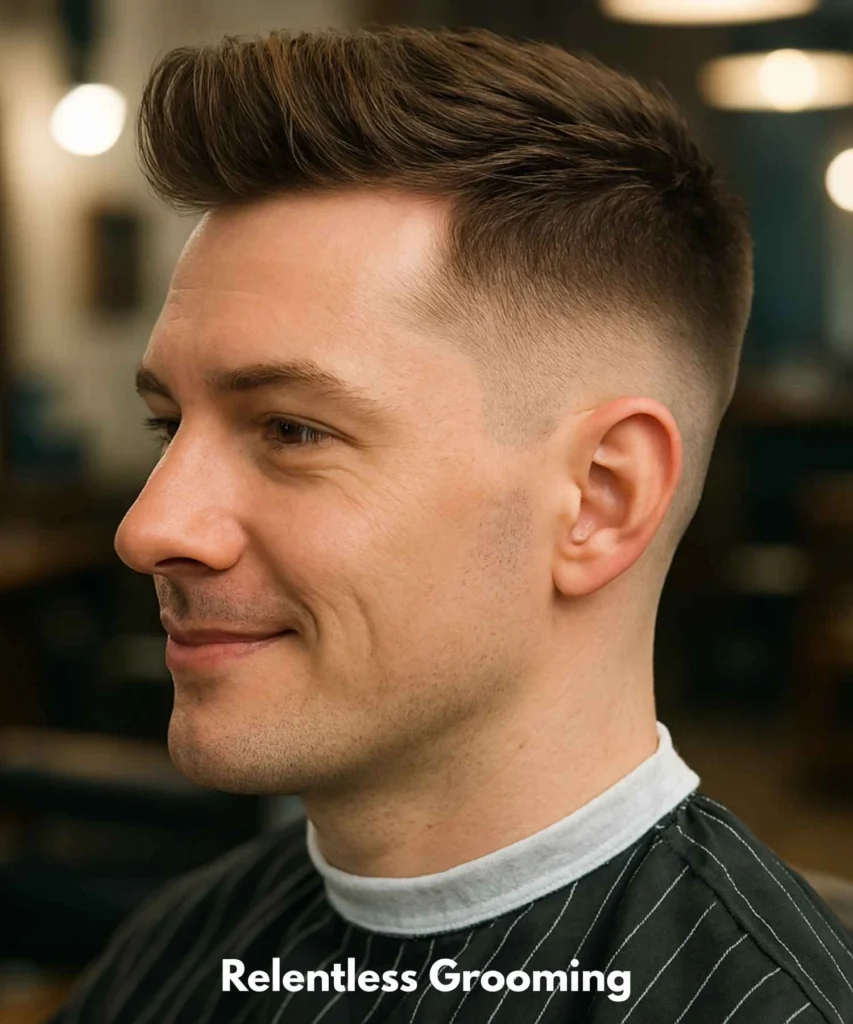
This style offers a more relaxed and textured cousin to the pompadour. The quiff has volume and lift at the front but feels softer, messier, and more modern, with a gentle fade keeping it grounded.
Barber Instructions: Ask for a low taper fade or shadow fade. Request textured layers on top, especially at the front, to create the loose, pushed-up volume characteristic of a quiff.
Product Tip: Use a matte finish clay or texture powder. Work it through dry hair to add grit, separation, and a flexible hold that maintains volume without looking stiff.
3. Low Fade Comb Over
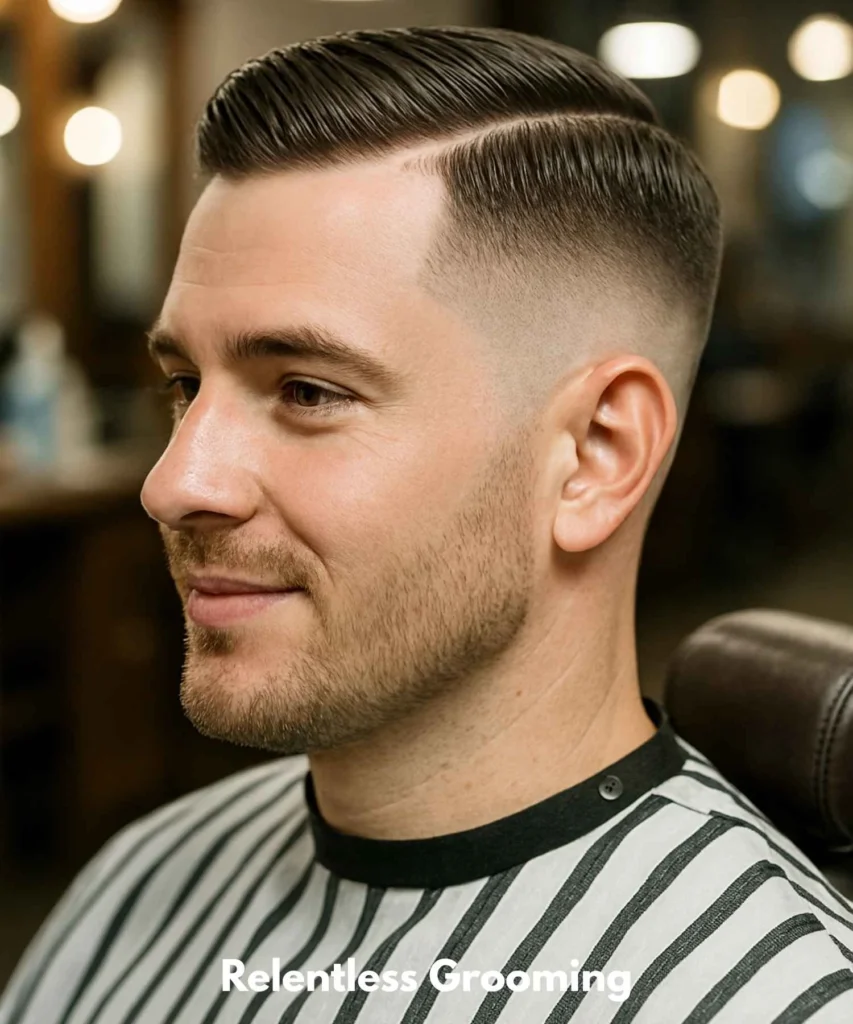
This is the epitome of sleek, side-parted sophistication. It features a deep, clean part with hair swept smoothly to one side, resting over neatly faded sides for a sharp, corporate-friendly look.
Barber Instructions: Ask for a low fade with a hard part or side part shaved in. The top needs enough length to be combed smoothly across the head from the deep part.
Product Tip: Use a medium-shine pomade or grooming cream. Apply it to damp hair and comb through precisely to achieve a slick, defined, and glossy finish.
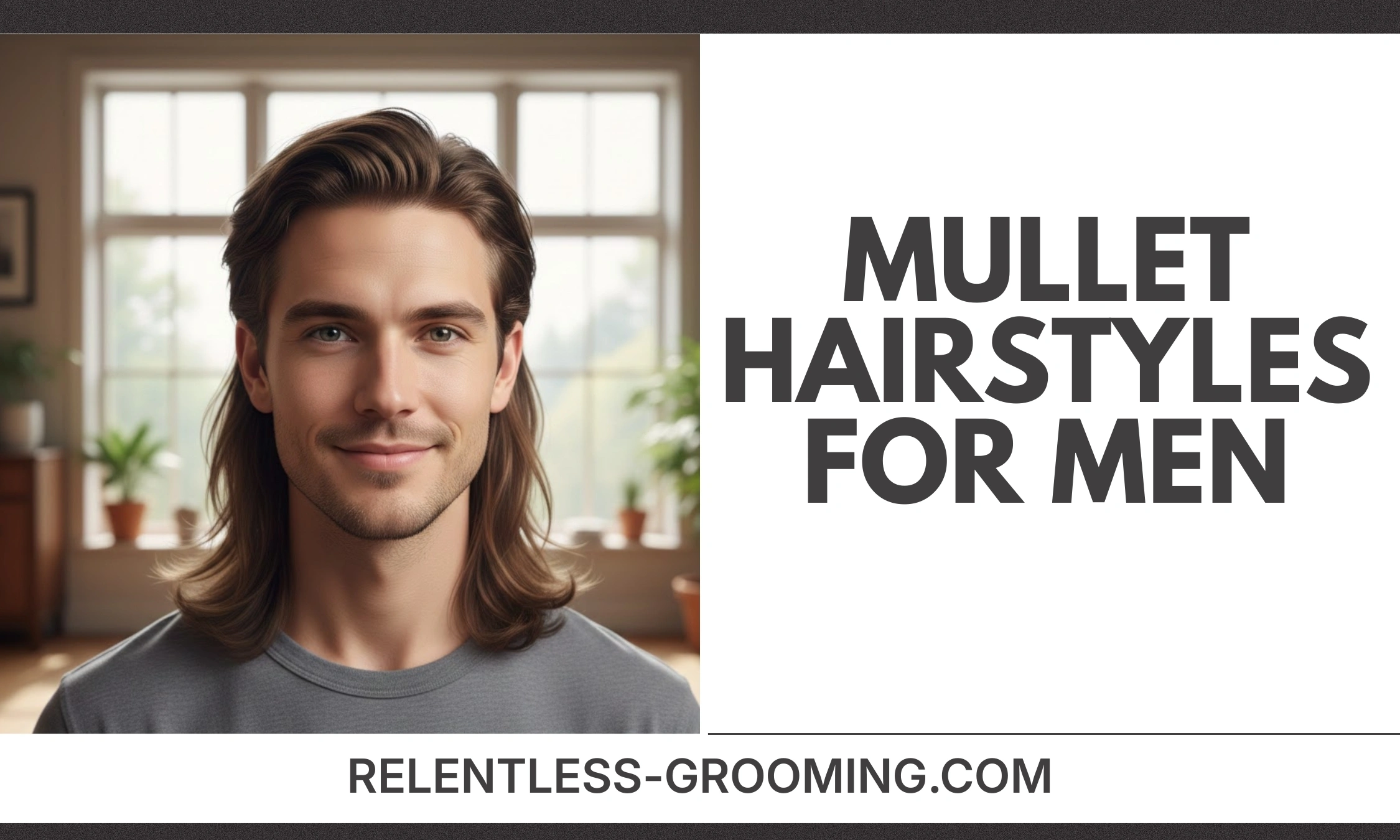
Ready to try a bold haircut that blends retro attitude with modern edge and personality?
modern mullet hairstyle ideas for men4. Low Fade Slick Back
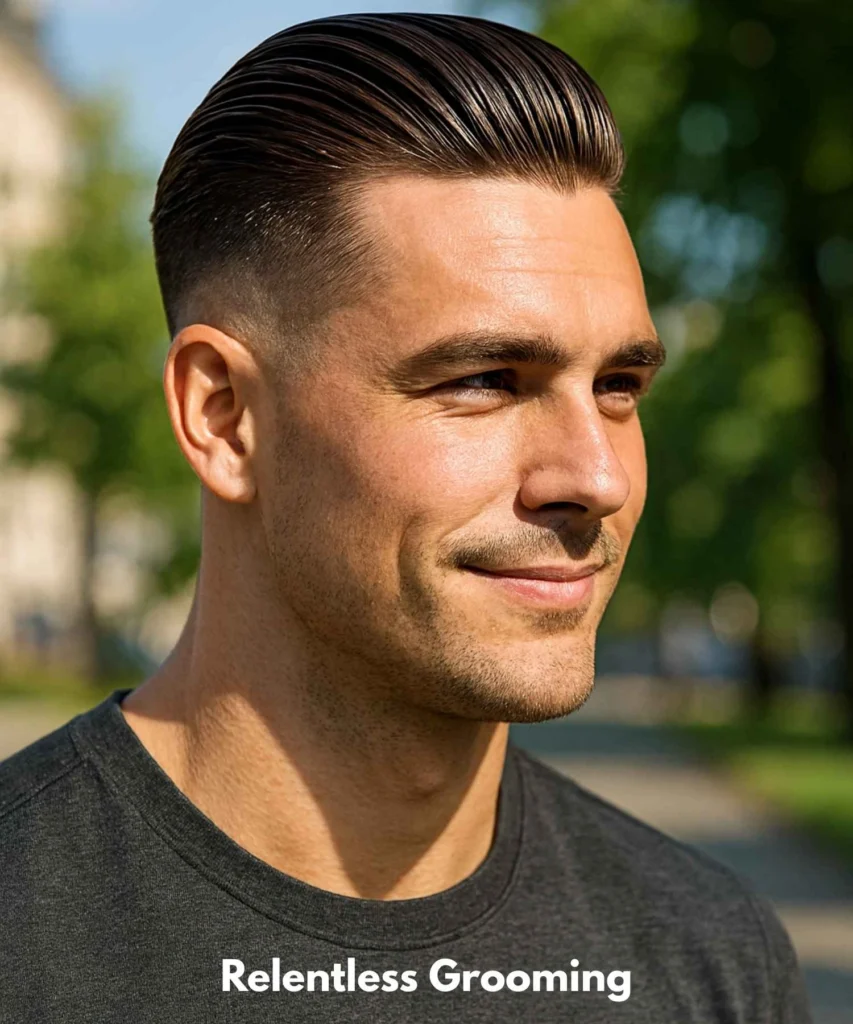
This look channels classic, undefeated confidence. All the hair on top is swept directly back, creating a seamless, glossy flow from hairline to crown, amplified by the clean contrast of the fade.
Barber Instructions: Ask for a classic low fade. Ensure the top is left with uniform, ample length (at least 3-4 inches) to be pulled back without parting.
Product Tip: Use a high-shine pomade or gel. Apply generously to towel-dried hair, comb straight back, and allow it to dry for a wet-look finish that holds all day.
5. Low Fade Blowout
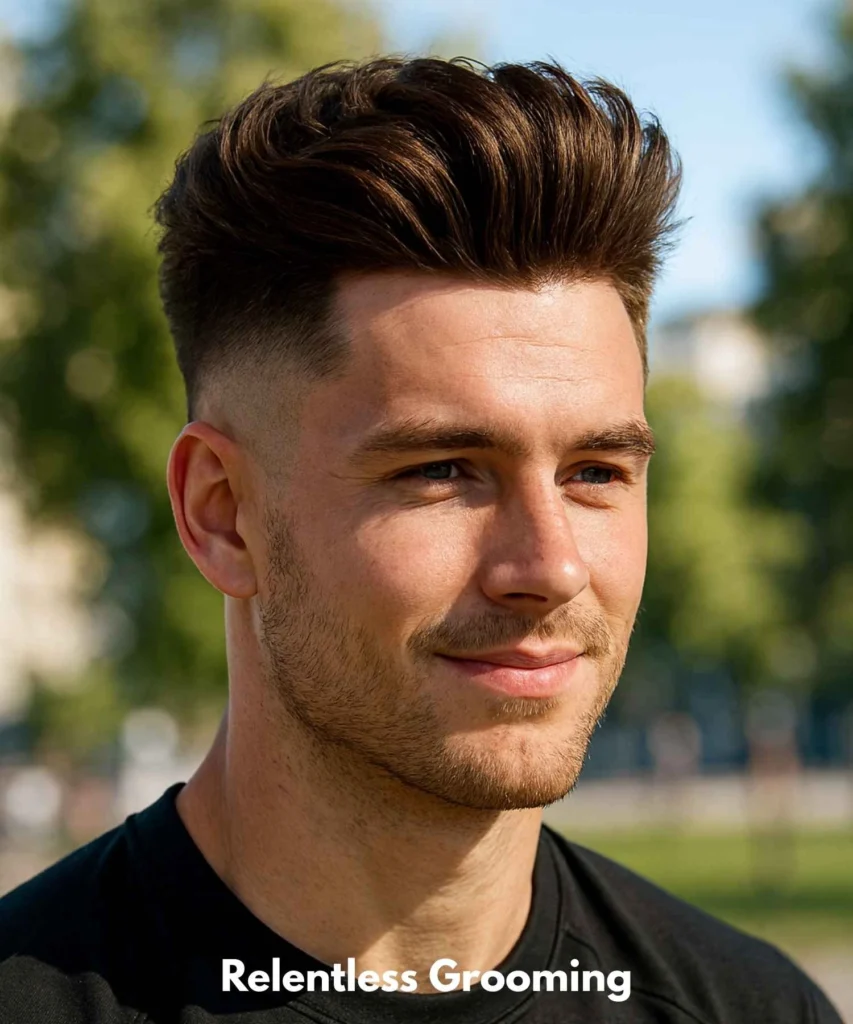
This style is all about maximum volume and body. The hair on top is cut in rounded layers and blown outward for a full, bouncy shape that sits dramatically above the faded sides.
Barber Instructions: Ask for a low drop fade or shadow fade. The top must be cut with rounded, graduated layers to support the blown-out, voluminous shape.
Product Tip: Use a volumizing mousse and a round brush. Apply mousse to roots, then blow-dry sections with the round brush, lifting at the root to create lasting height and body.
6. Low Fade French Crop
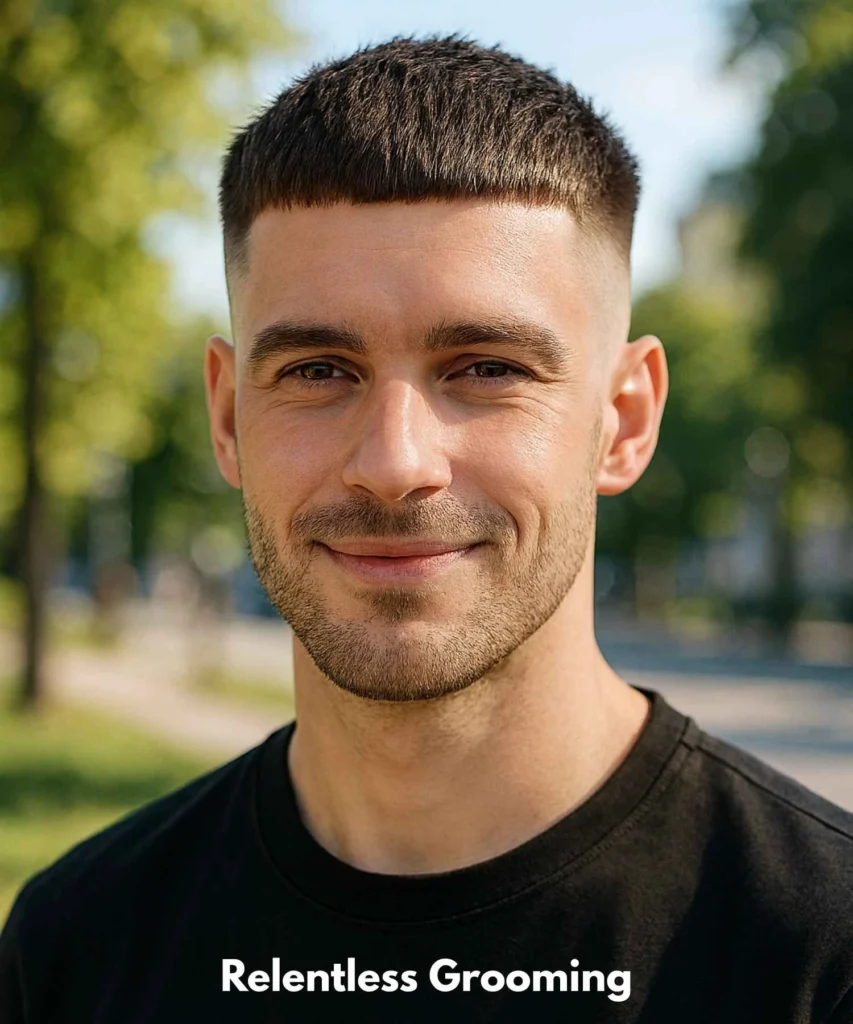
This modern, textured look features a short, cropped fringe across the forehead with disconnected, faded sides. It’s a minimalist, urban style that’s both edgy and easy to manage.
Barber Instructions: Ask for a low skin fade with a disconnected top. The front fringe should be cut short and straight across, while the crown can be slightly longer and textured.
Product Tip: Use a texturing paste or wax. Rub a small amount between your fingers and piece out the short fringe and top for a matte, separated finish.
Want curly hairstyles that bring out texture, personality, and effortless everyday style?
trendy curly hairstyles for men7. Low Fade with Hard Part
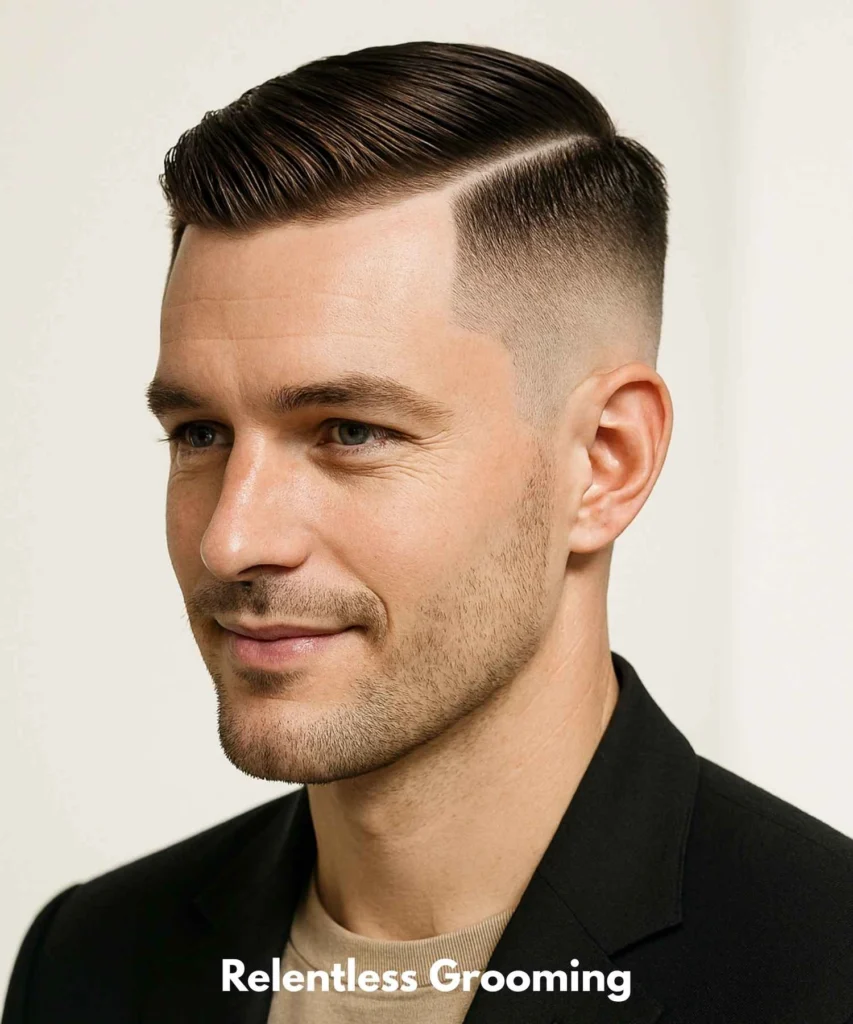
This cut adds a line of sharp definition. A precise, shaved-in part creates a dramatic divide between the faded side and the styled top, offering a clean, graphic element.
Barber Instructions: Specify you want a hard part. Your barber will use a trimmer to shave a single, clean line along your desired part before executing the low fade on the sides.
Product Tip: Use a light pomade or cream. Style the top as desired, using the hard part as your guide. The product should define the style without weighing down the sharp line.
8. Low Fade with Side Part
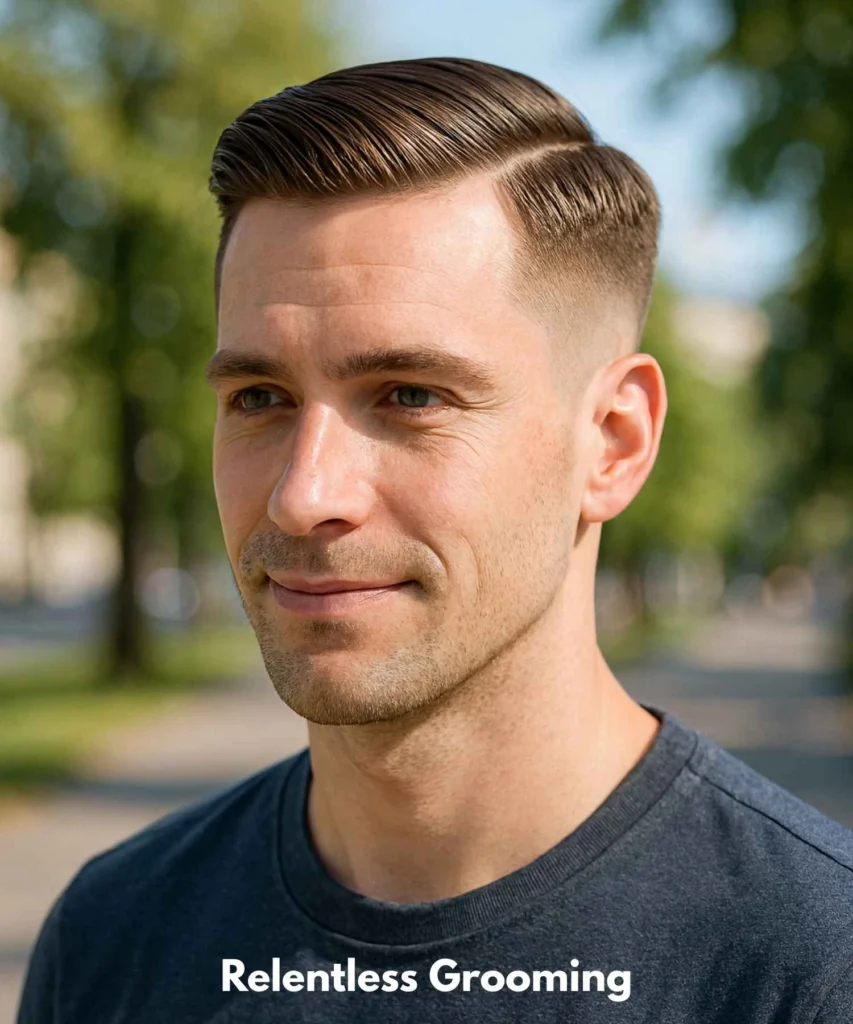
This is the timeless standard for a reason. A classic, combed side part (not shaved) meets a subtle low fade, resulting in a look that is forever polished, professional, and versatile.
Barber Instructions: Ask for a low taper fade. Clearly show your barber where your natural side part falls so they can cut and blend the hair to flow naturally from that point.
Product Tip: Use a light-hold styling cream. Work it through damp hair, comb into place with your side part, and let it dry naturally for a soft, touchable hold.
9. Low Fade with Diagonal Fade Line
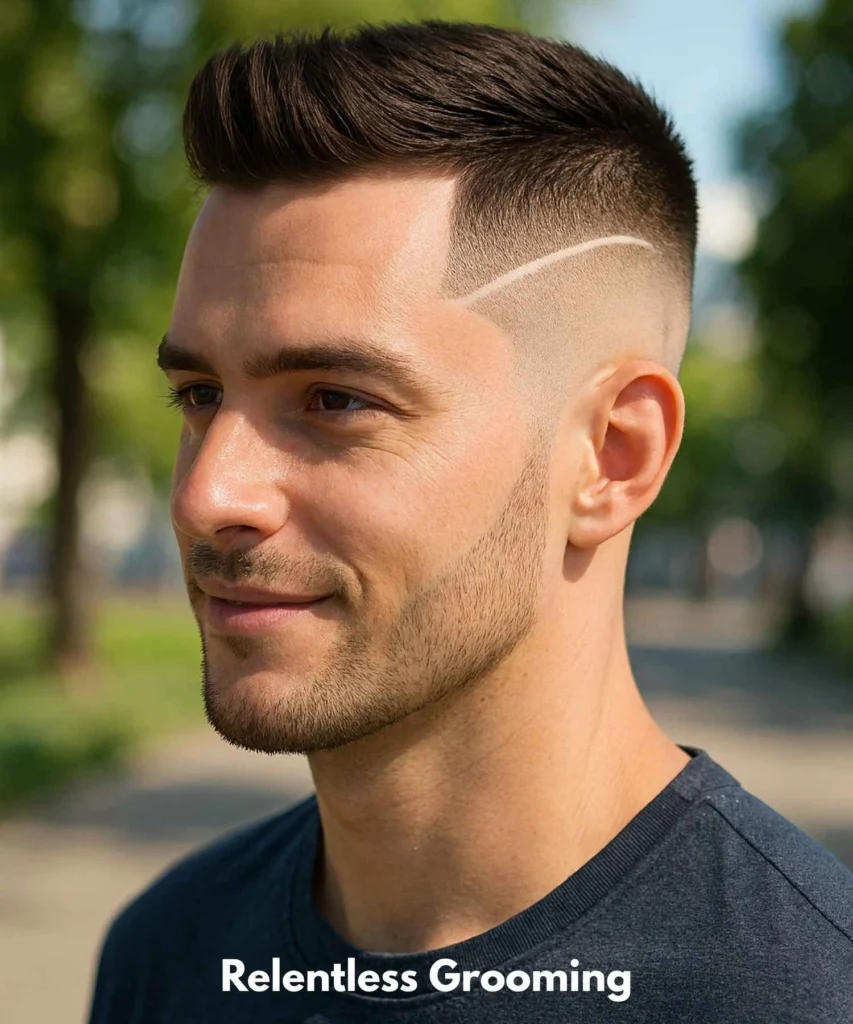
This is a dynamic, fashion-forward twist. The fade line angles diagonally from the front to the back of the head, creating a sense of motion and unique personal flair.
Barber Instructions: Ask for a low fade with a diagonal guideline. Be specific about the angle you want—perhaps from the high temple diagonally down toward the back of the neck.
Product Tip: Use a matte styling clay. Its strong, pliable hold is perfect for styling the top in a way that complements, rather than competes with, the bold diagonal line.
C. Textured & Modern Variations
These hairstyles are perfect to make your characters shine. These styles are more than classic cuts to celebrate the natural beauty of your hair. These styles combine with a clean foundation to express a crown of confidence.
1. Textured Top Low Fade
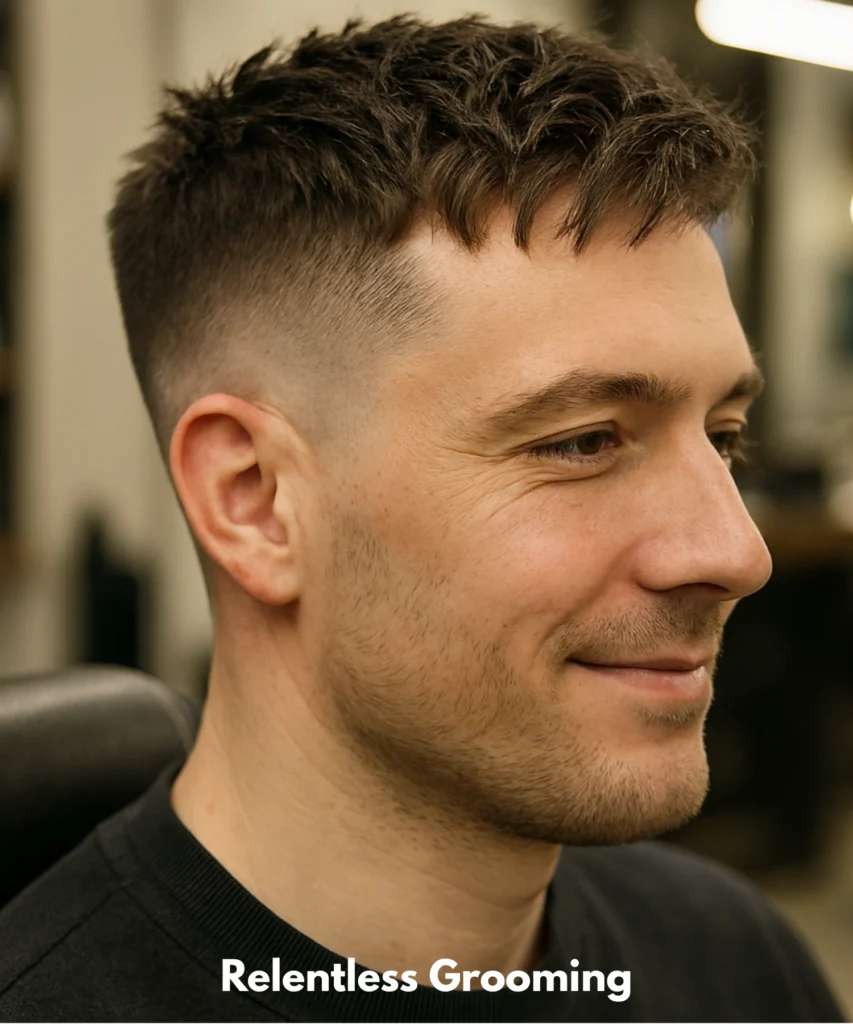
This look is the art of intentional imperfection. It combines a precise, clean fade with a top full of chopped, separated layers, creating a dynamic and touchable finish that is both rugged and refined.
Barber Instructions: Ask for a low taper fade. For the top, request point-cutting or razor-cutting techniques to create lots of short, choppy layers and remove weight, maximizing natural movement and texture.
Product Tip: Use a texturizing paste or sea salt spray. Work it through damp or dry hair to accentuate the layers, add separation, and create a piecey, matte finish with flexible hold.
2. Messy/Short Messy Waves with Low Fade
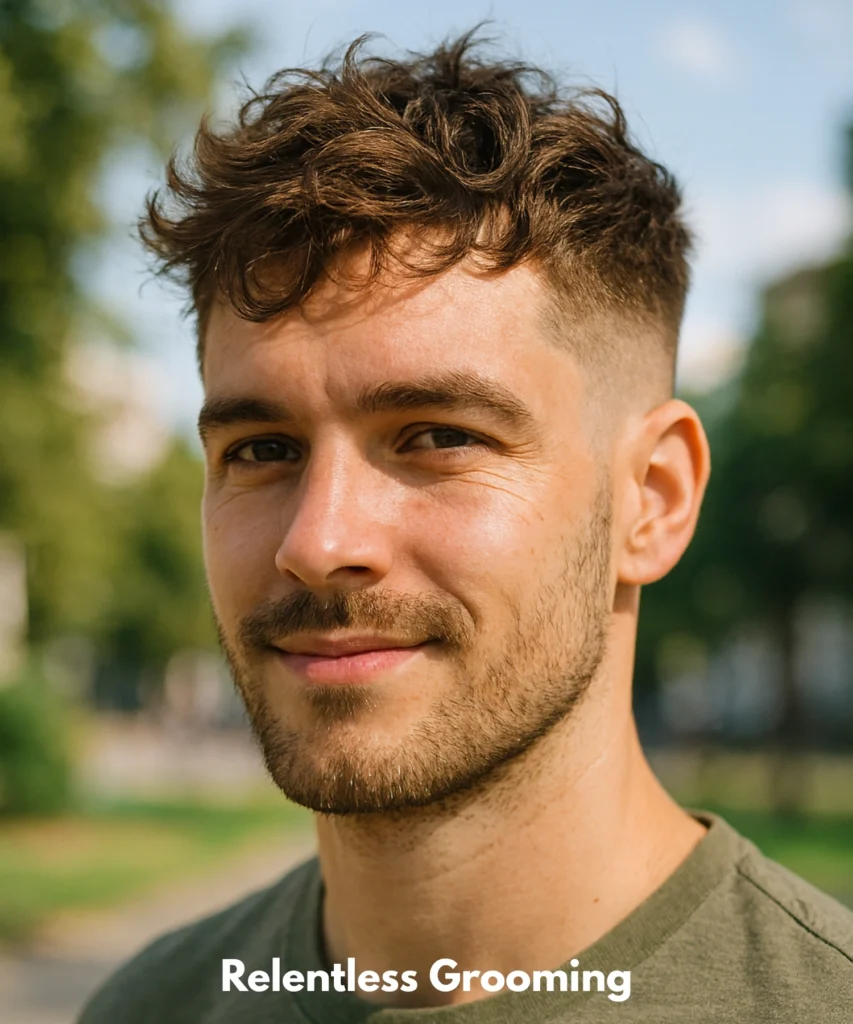
This style captures effortless, off-duty cool. It allows natural waves to fall in a relaxed, unstructured pattern, creating a look that appears casually tousled yet is perfectly balanced by the sharp fade.
Barber Instructions: Ask for a low shadow fade to keep the sides soft. The top should be cut with light, uneven layers to encourage your wave pattern, avoiding any bulky or heavy shapes.
Product Tip: Use a defining cream or light mousse. Apply to towel-dried hair, scrunch gently, and let it air-dry to enhance your natural wave pattern with a soft, touchable hold and minimal frizz.
3. Low Fade with Curly Top
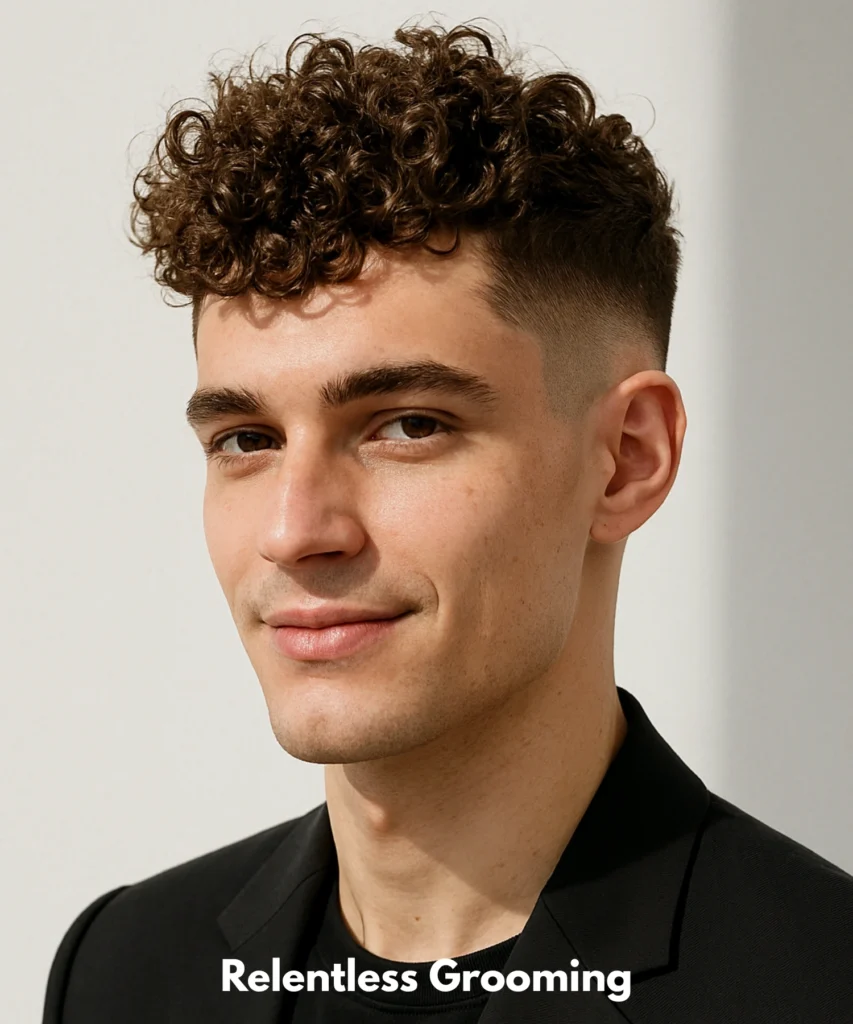
This is a bold celebration of volume and shape. It lets a full head of defined curls take center stage, sharply contrasted against the faded sides for a look that is powerful, proud, and full of personality.
Barber Instructions: Ask for a low skin fade or drop fade. The top must be cut dry or in its natural curly state to properly shape the curl pattern and maintain the necessary volume and round shape.
Product Tip: Use a curl-defining cream or custard. Apply generously with a raking or praying-hands method to wet hair to define curls, reduce frizz, and provide long-lasting moisture and shape
4. Low Fade Afro
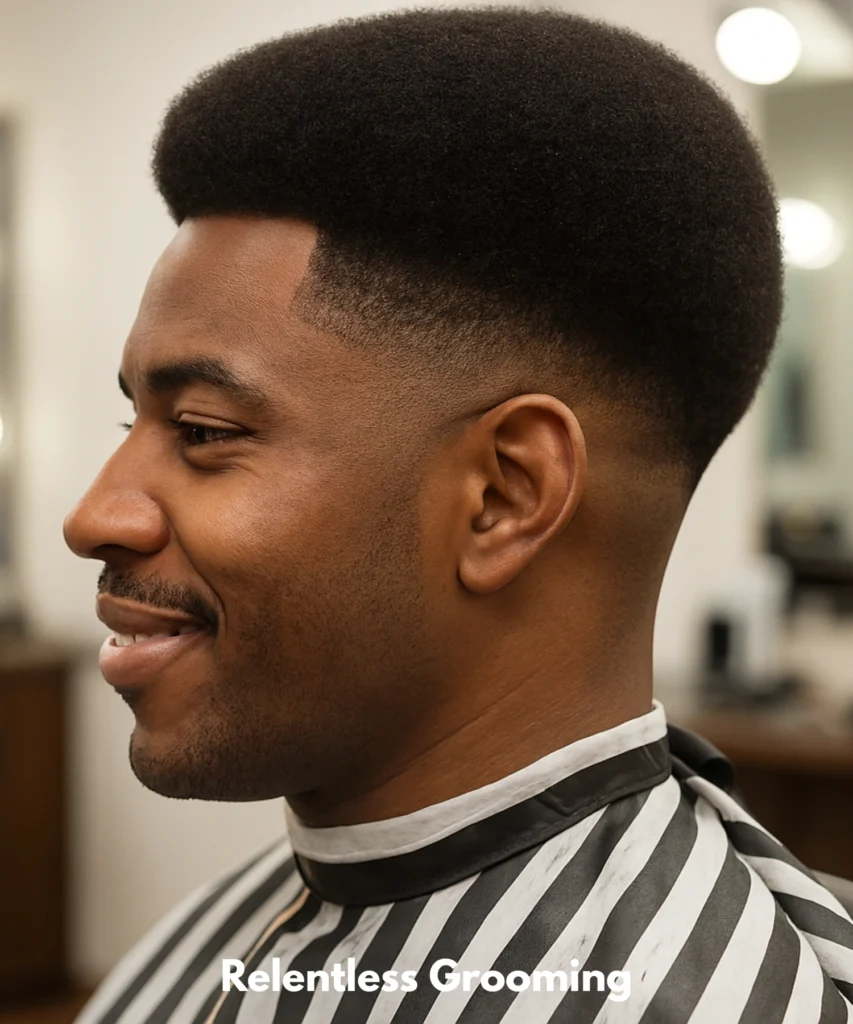
This iconic style is a statement of timeless style and natural beauty. It pairs the rounded, majestic shape of a perfectly picked afro with the clean, sharp lines of a fade, creating a striking and harmonious silhouette.
Barber Instructions: Ask for a low skin fade. The afro on top should be trimmed evenly into a uniform, rounded shape, maintaining enough length and volume to achieve its full, classic form.
Product Tip: Use a wide-tooth comb and a light oil or moisturizing spray. Regularly pick the hair from the roots to maintain volume and shape, using products to keep the hair hydrated and healthy.
5. Low Fade with Curly Fringe
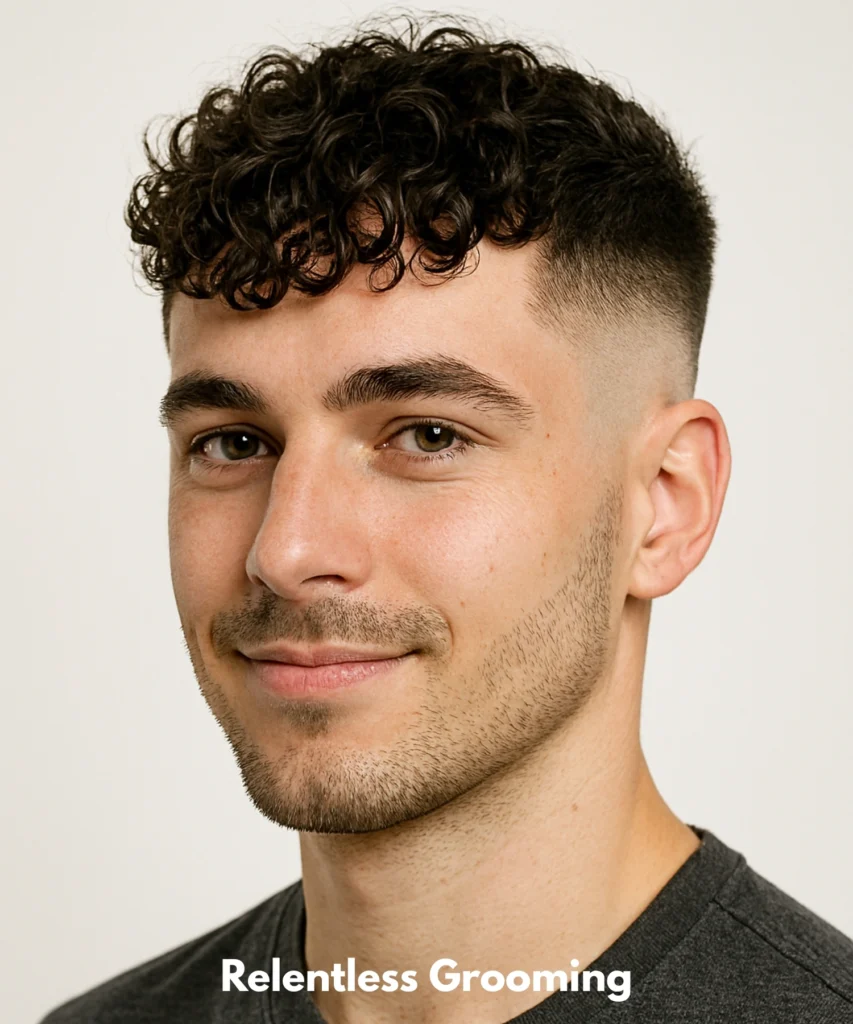
This playful and modern look frames the face with a cascade of curls. A defined, curly fringe hangs over the forehead, offering a soft contrast to the masculinity of the faded back and sides.
Barber Instructions: Ask for a low fade. Specifically, leave length and weight at the front of your hairline to create a distinct, curly fringe that can be styled forward.
Product Tip: Use a styling gel with a strong cast. Apply to soaking wet curls at the front, define them with your fingers or a denman brush, and allow to dry completely for a defined, frizz-free fringe.
6. Wavy or Blonde Wavy Low Fade
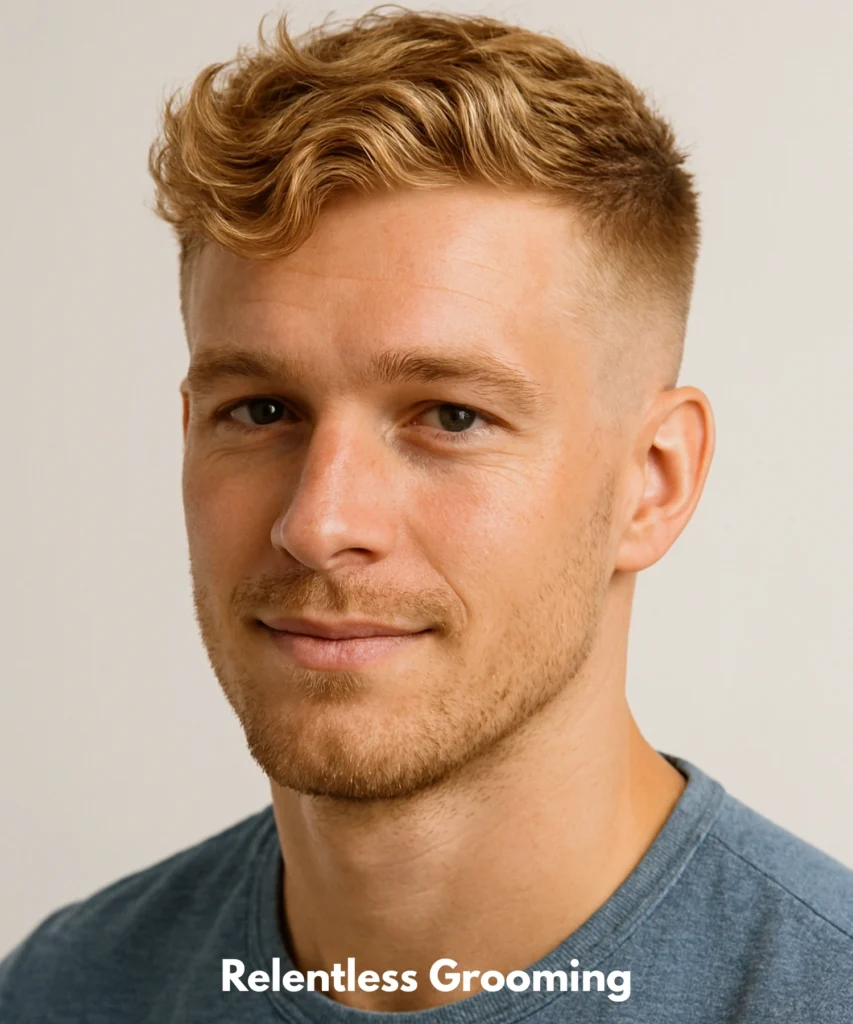
This style uses texture and tone for a sun-kissed, effortless effect. The natural wave is enhanced, and when paired with blonde tones, it creates dimensional movement and a relaxed, coastal vibe.
Barber Instructions: Ask for a very low or shadow fade for subtlety. Cut the wavy top with long, blended layers to encourage the hair’s natural flow and movement without sacrificing thickness.
Product Tip: Use a purple shampoo weekly to maintain blonde tone, and style with a texturizing sea salt spray to enhance wave definition and create a piecey, matte finish.
7. Low Fade with Twists
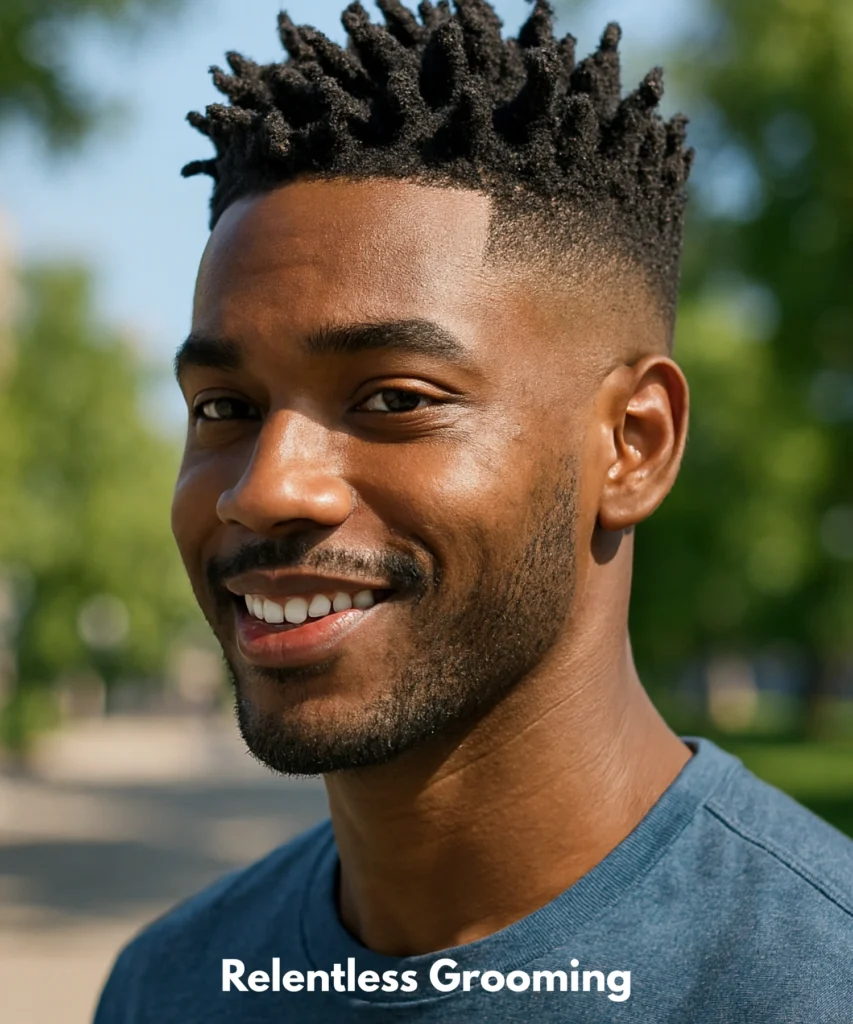
This look is a masterful blend of protective styling and sharp grooming. Neat, uniform twists on top provide a unique, textured pattern that is both artistic and low-maintenance, elevated by the clean fade.
Barber Instructions: Ask for a low skin fade. Ensure you have enough hair length and density on top (typically 3-4 inches) for a barber or stylist to create clean, consistent twists.
Product Tip: Use a twisting cream or butter. Section the hair and apply the product thoroughly before twisting to ensure definition, shine, and longevity while keeping the style nourished.
8. Bouncy Mini Curls with Low Fade
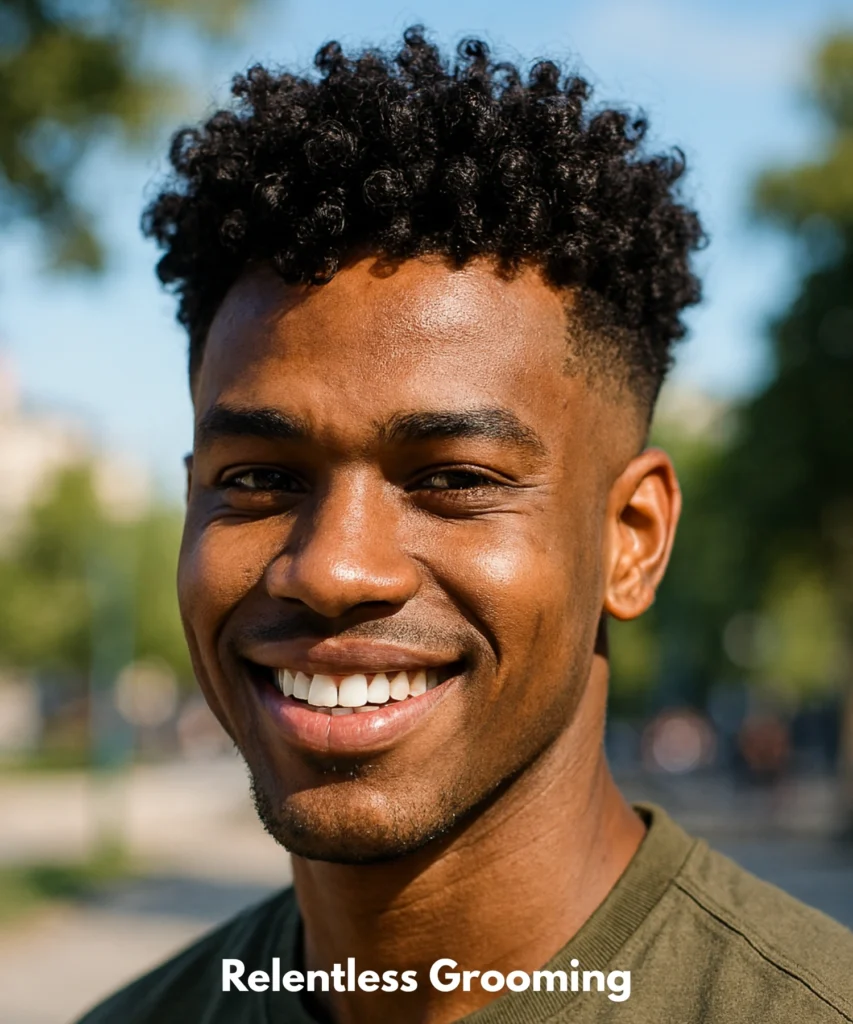
This style is all about joyful, dynamic energy. Tight, springy curls are cut into a rounded shape, creating incredible texture and bounce that sits playfully above the clean, faded foundation.
Barber Instructions: Ask for a low drop fade. The curls on top should be cut while dry into a rounded shape to maintain their natural spring and ensure the overall silhouette is balanced and full.
Product Tip: Use a leave-in conditioner and a strong-hold curl mousse. Apply both to soaking wet hair, scrunch thoroughly, and diffuse to dry, which will maximize curl definition, volume, and lasting bounce.
D. Edgy & Statement Variations
1. Low Fade with Design (Etched/Art Line)
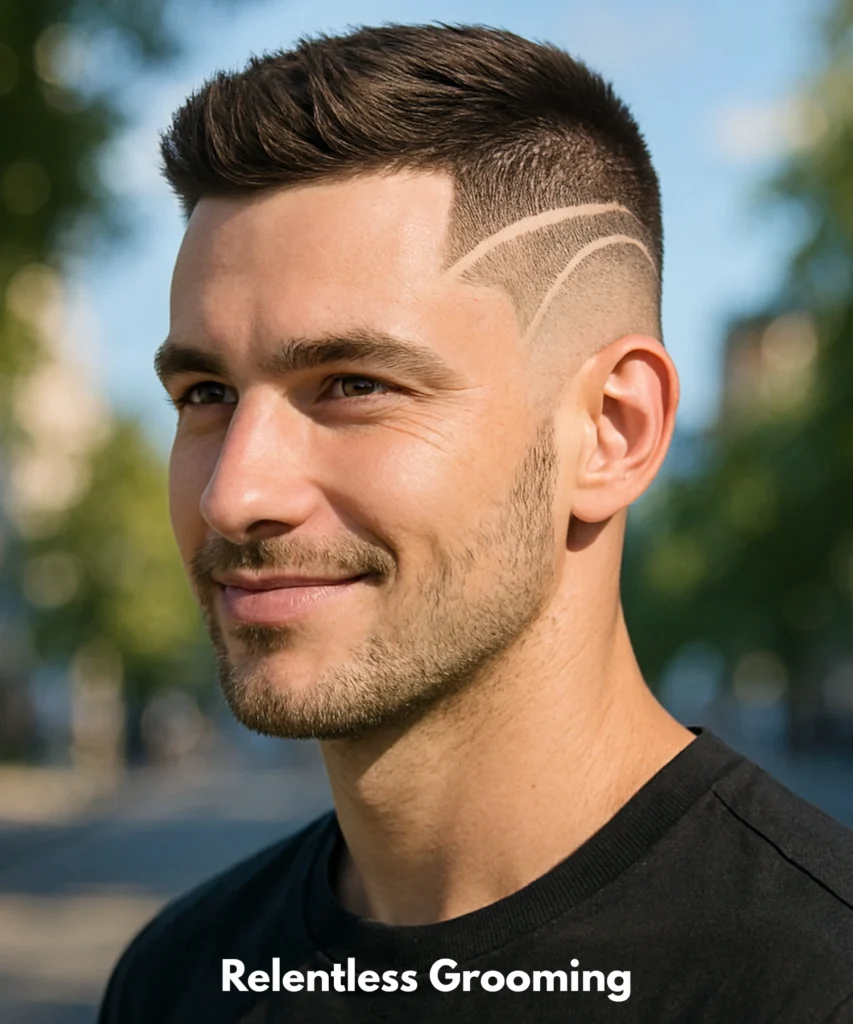
This transforms your haircut into a personal canvas. A precise, shaved design—be it geometric lines, patterns, or symbols—is etched into the faded area, adding a layer of unique, wearable artistry to the classic shape.
Barber Instructions: Ask for a low skin fade first. Then, request a specific, detailed design (bring a picture!) to be etched with a precision trimmer or razor along the temple or behind the ear.
Product Tip: Use a matte styling clay on the top. Its dry finish keeps attention on the sharp design, and a dab can also help define the etched lines.
2. Low Fade Mohawk / Faux Hawk
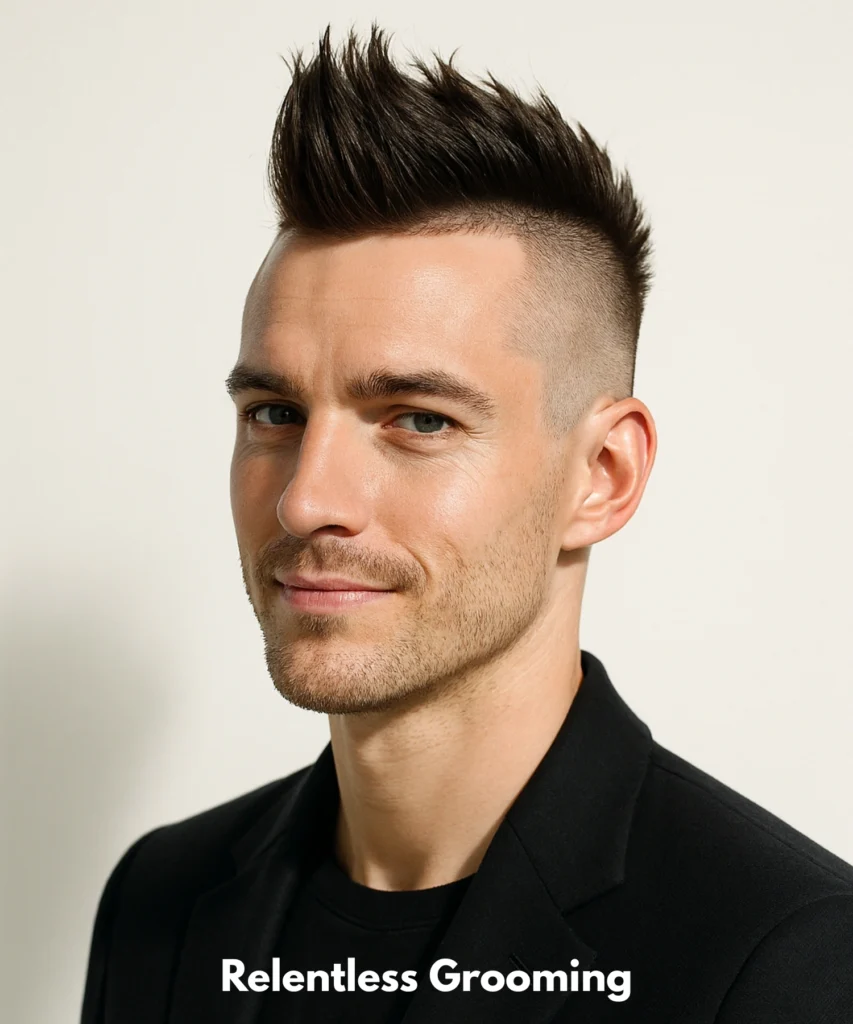
This is pure, concentrated attitude. A strip of hair from forehead to crown is left long and styled upward, creating a central ridge of height that is dramatically flanked by sharply faded or shaved sides.
Barber Instructions: Ask for a disconnected low skin fade. Leave a distinct, wide strip of hair down the center of your head (3-4 inches wide) with the length and weight needed to stand up.
Product Tip: Use a strong-hold glue, wax, or pomade. Apply to damp hair in the mohawk strip and use a blow-dryer and your fingers to lift and shape it vertically for all-day hold.
3. Disconnected Low Fade
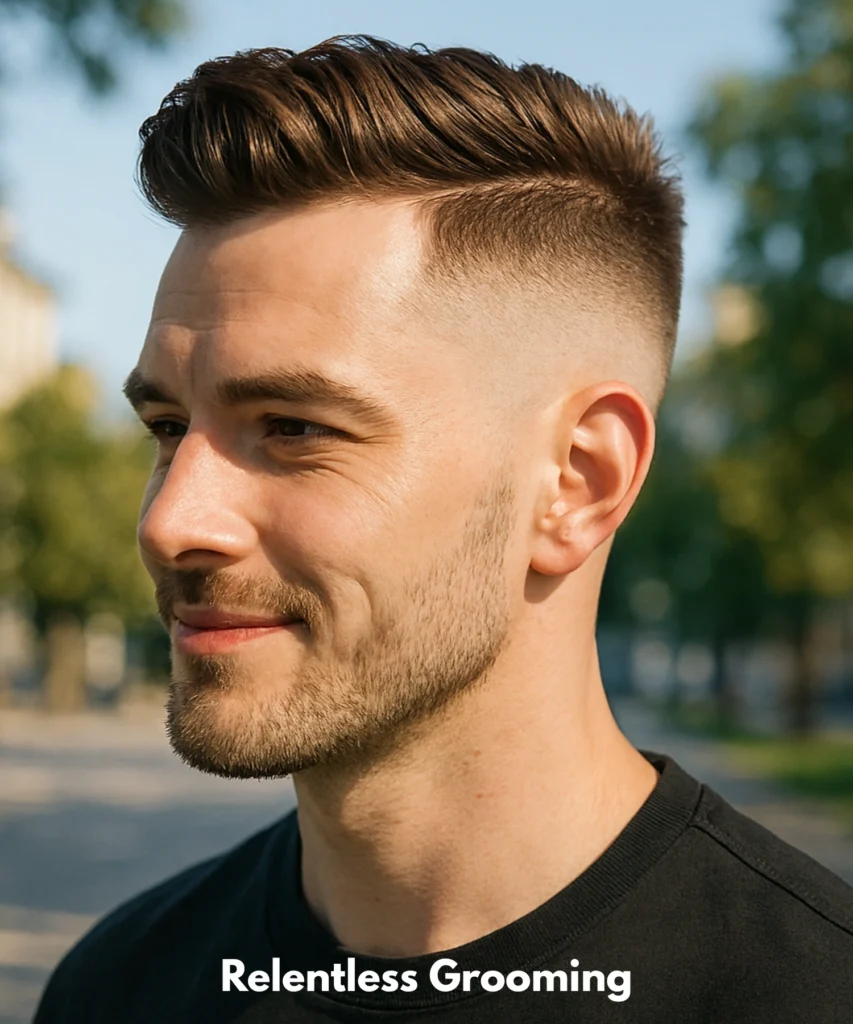
This style is all about dramatic, architectural contrast. There is no blending or graduation; the long, heavy top sits directly atop the sharply faded sides, creating a bold, striking line that defines the entire look.
Barber Instructions: Clearly ask for a “disconnected” cut. The barber will create a hard, horizontal line around your head where the long top meets the very short, faded sides with no blending.
Product Tip: Use a high-hold, matte product like a putty or clay. It provides the strong structure needed to maintain the weight and shape of the disconnected top.
4. Low Fade with Beard Blend
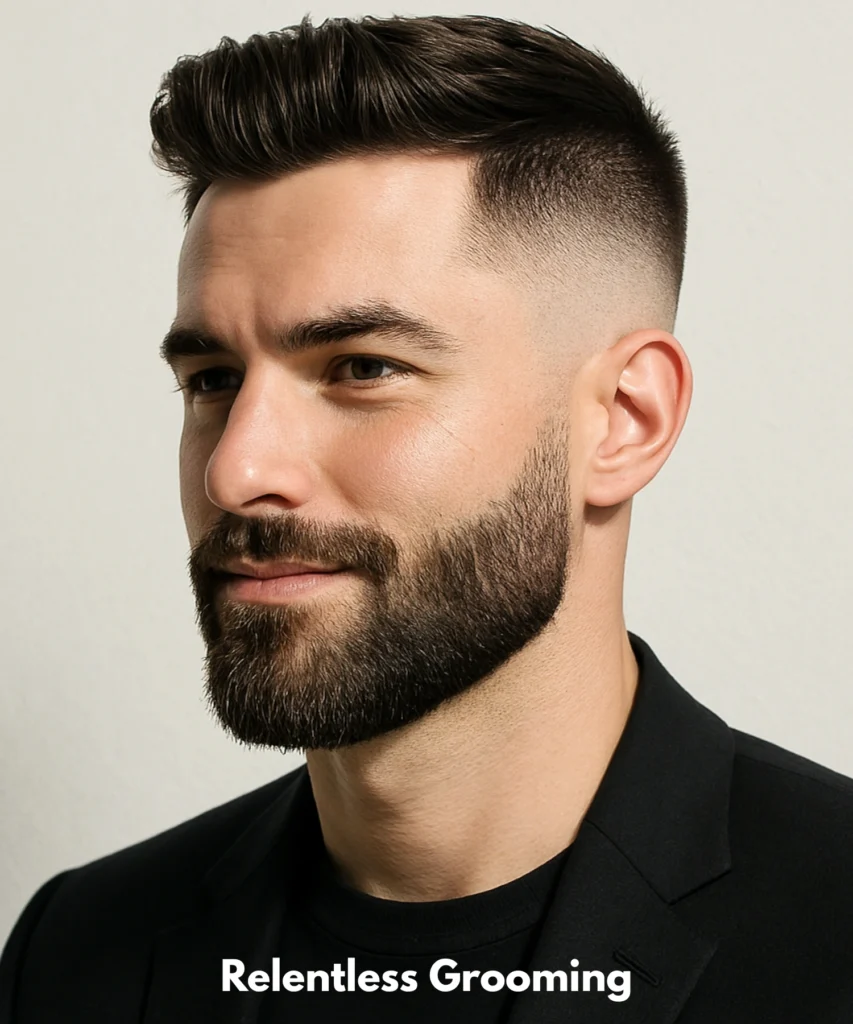
This look creates a seamless, powerful silhouette from scalp to jawline. The low fade on the sides doesn’t end at the hairline but continues down, expertly blending into your beard for a unified, sharp, and masculine profile.
Barber Instructions: Ask for a low fade that blends into your beard. Your barber will fade the sideburns and cheek line so there is no distinct border between your haircut and your facial hair.
Product Tip: Use a beard balm or butter. After styling your hair, work the same or a similar product through your beard to create a cohesive texture, shine, and style.
5. Low Fade with Undercut
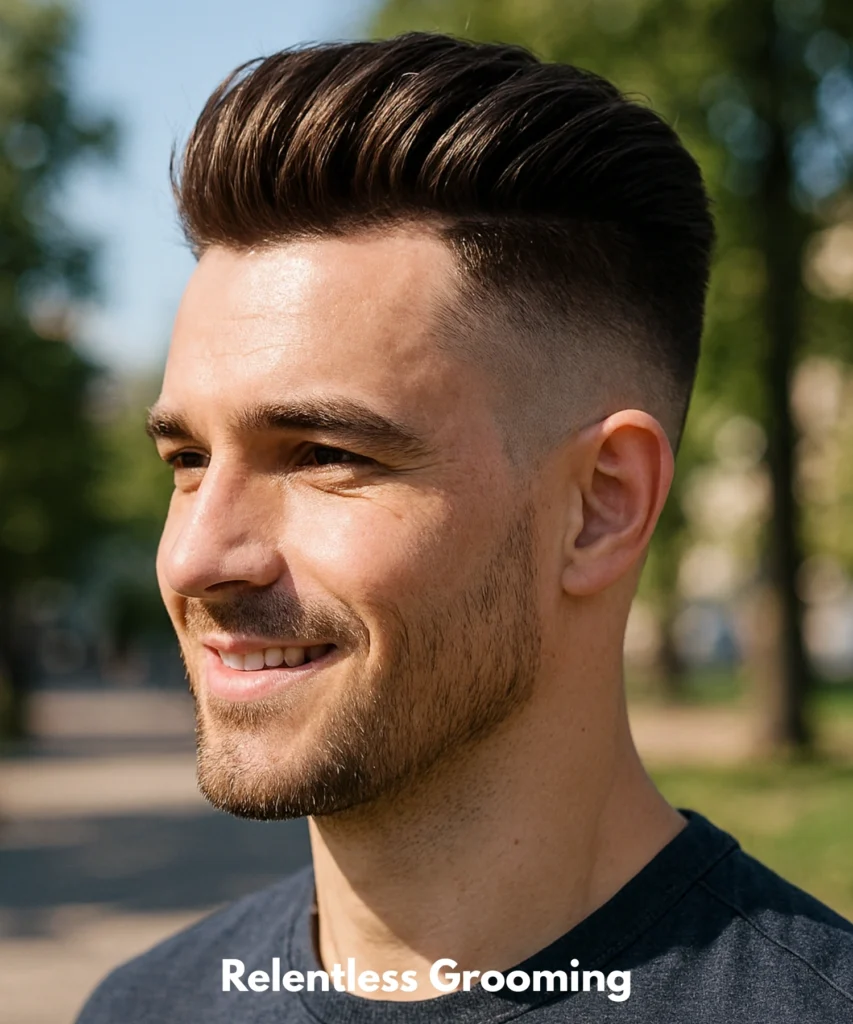
This variation adds a hidden element of edge. While the sides are faded, the hair directly on top is also cut with an undercut—shorter underneath and longer on top—to create immense volume and a sharp, heavy shape.
Barber Instructions: Ask for a low fade with an undercut on top. This means the hair on the crown will be cut shorter underneath (clippers) and left longer on the surface (shears) to “stack” for height.
Product Tip: Use a volumizing powder or mousse at the roots. This is key to lifting the heavy top and maximizing the dramatic volume the undercut is designed to create.
6. Low Fade Crew Cut
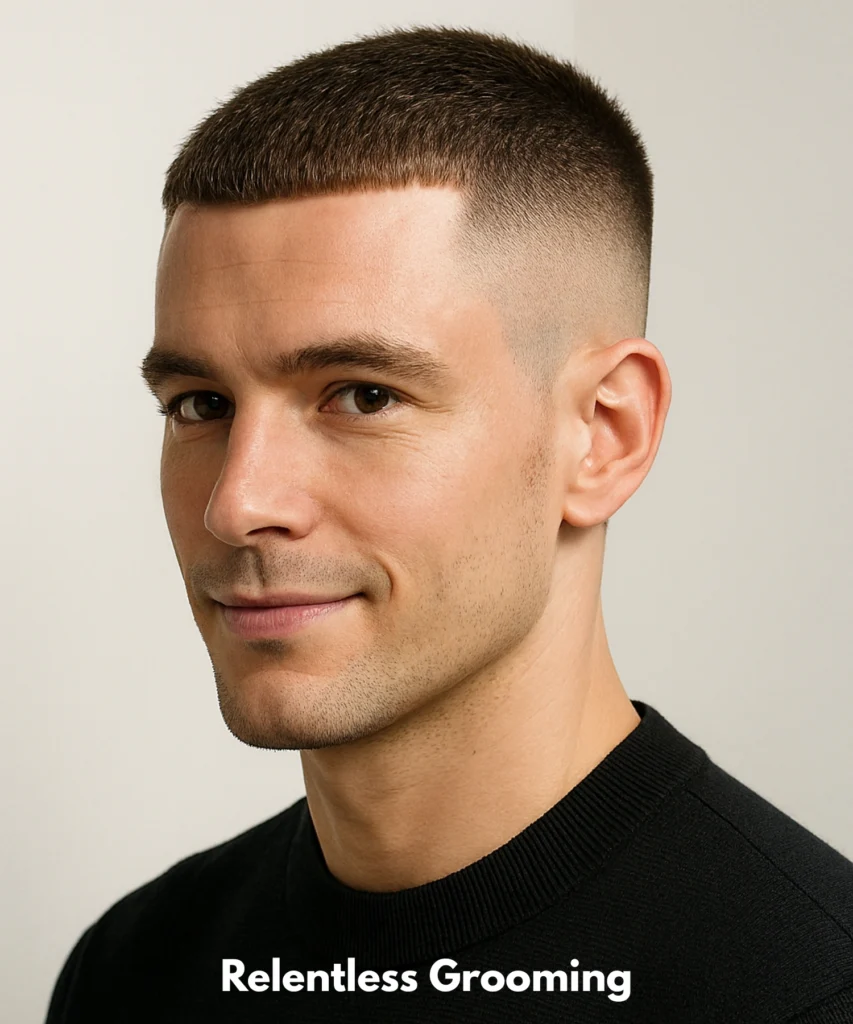
This is structured, military-inspired precision. The top is cut very short and level, often with a slight taper at the front, sitting like a crisp cap above the clean, faded sides for a no-nonsense, timeless look.
Barber Instructions: Ask for a low fade with a crew cut on top. Specify you want the top cut uniformly short (e.g., a #3 or #4 guard) and blended evenly into the faded sides and back.
Product Tip: Use a light grooming cream or wax. A tiny amount is enough to add slight definition and control to the short hair without making it look spiky or greasy.
7. Low Taper with Caesar Cut
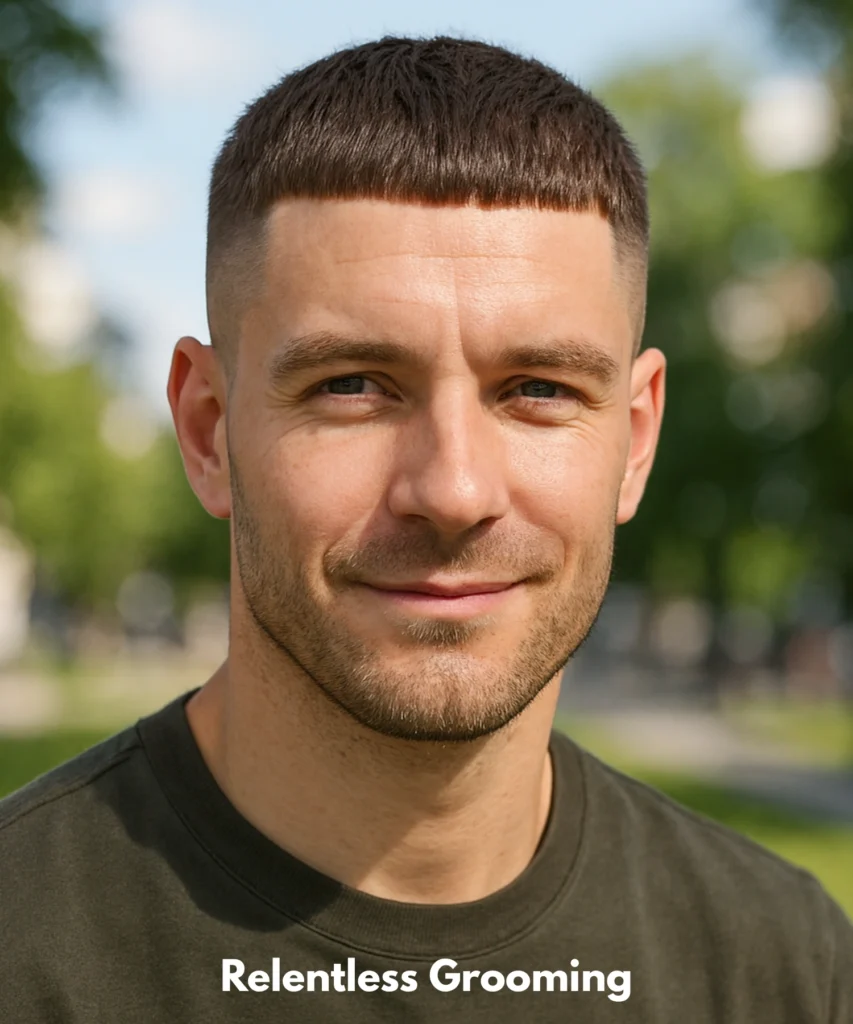
This style draws from ancient Roman aesthetics. It features a short, horizontal fringe cut straight across the forehead, combined with uniformly short hair on top that is neatly tapered at the sides.
Barber Instructions: Ask for a low taper with a Caesar cut. The top and fringe should be cut to a uniform, short length (about 1-2 inches) with blunt, straight lines across the forehead.
Product Tip: Use a small amount of pomade or wax. Smooth it over the top and fringe to add a subtle polish and keep the straight-across line crisp.
8. Low Burst Taper Variant
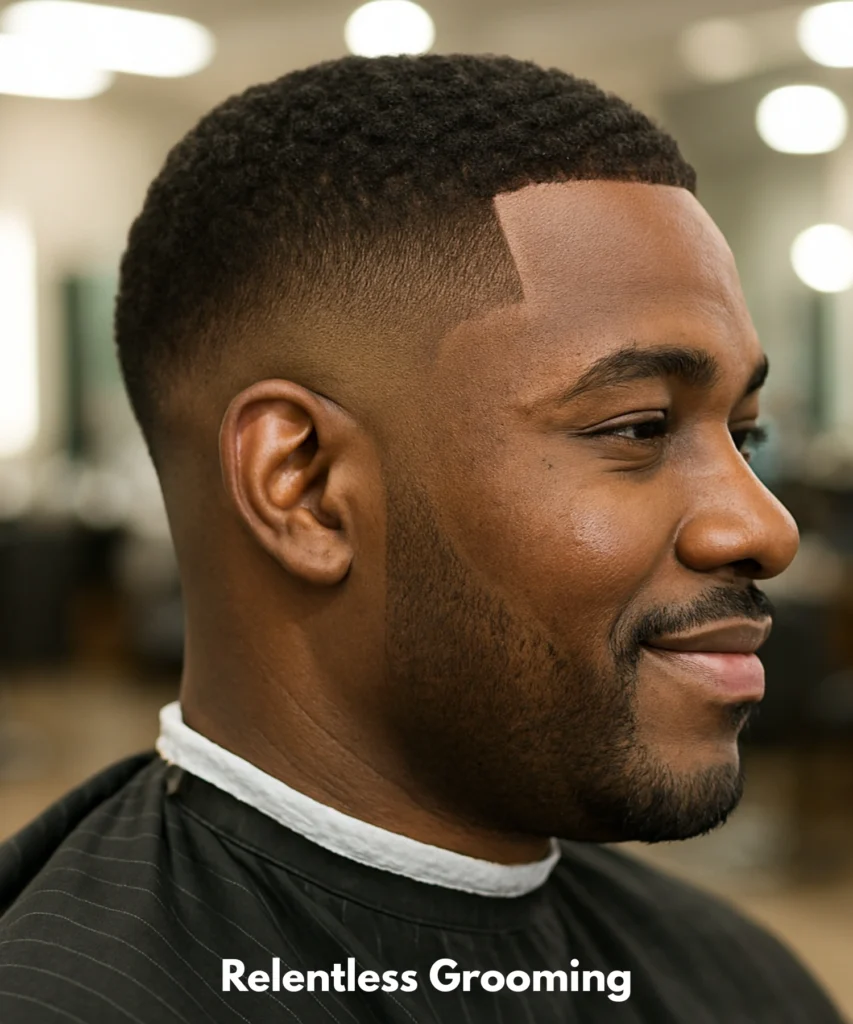
This cut creates a soft, sunburst effect around the ears. The taper radiates out in a circular or “burst” pattern from the ear, offering a more organic, rounded, and less linear fade alternative.
Barber Instructions: Ask for a low “burst” taper or fade. The barber will focus on tapering and blending in a circular pattern around the ear, creating a diffused, rounded appearance.
Product Tip: Use a light texturizing spray. It helps maintain the soft, diffused finish of the burst without adding weight or hard lines.
9. Low Taper with Square Crown
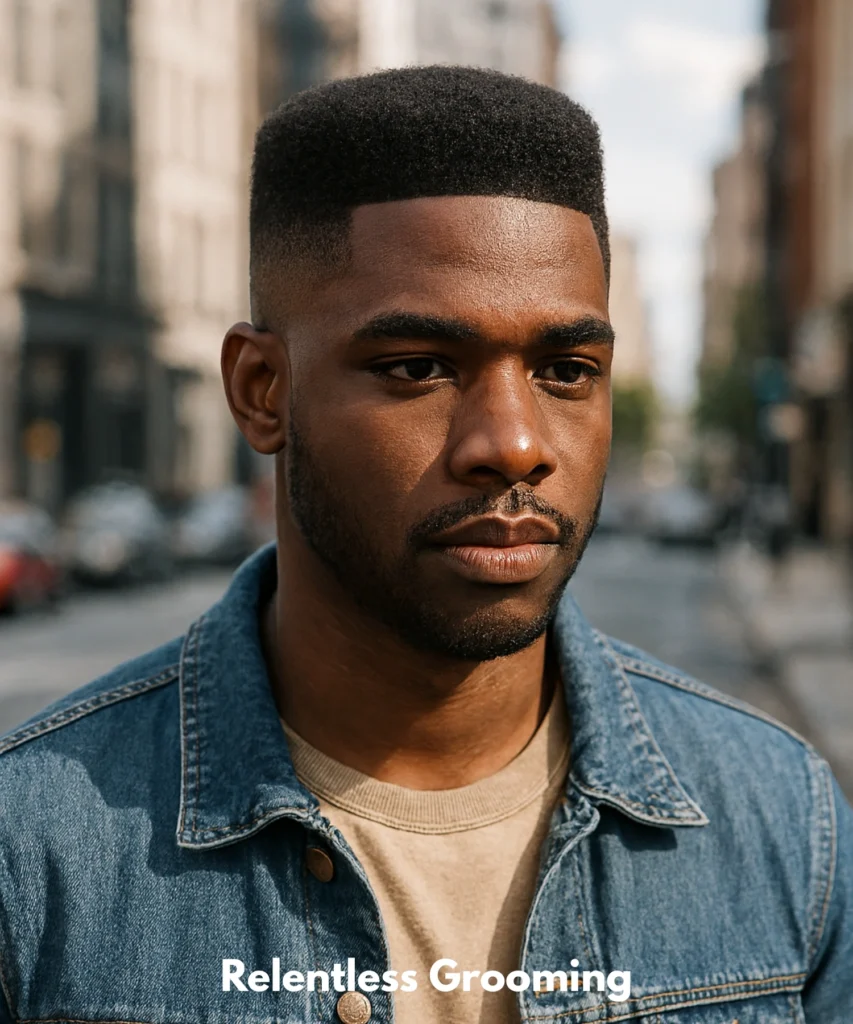
This is architectural barbering. The hair on the crown (the very top/back of your head) is cut and styled to have clean, squared-off corners, which helps to visually frame and structure the face.
Barber Instructions: Ask for a low taper with a square crown. Be specific that you want the back portion of the top hair shaped into a clean, squared-off block, not rounded.
Product Tip: Use a strong-hold, matte clay. Work it through the crown area to mold and hold the square shape firmly in place with a dry, defined finish.
10. Textured Mop Top Low Fade
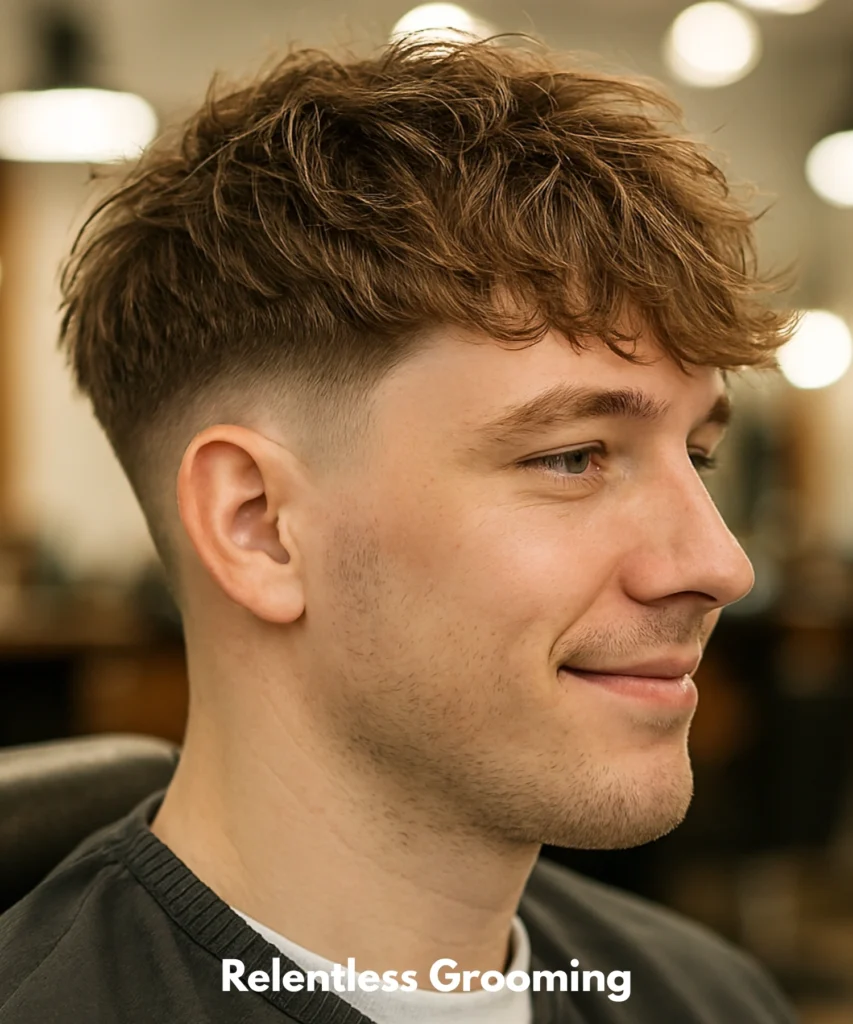
This look channels relaxed, indie cool. The top is long, shaggy, and heavily layered like a modern “mop,” creating a cascade of texture that contrasts playfully with the neat, faded sides.
Barber Instructions: Ask for a low fade. For the top, request long, disconnected layers with a lot of texture and movement, aiming for a full, piecey, and effortlessly tousled shape.
Product Tip: Use a texturizing sea salt spray or dry shampoo. These products enhance piecey separation and add that lived-in, airy texture that defines the mop top.
11. Low Taper with Side Sweeper
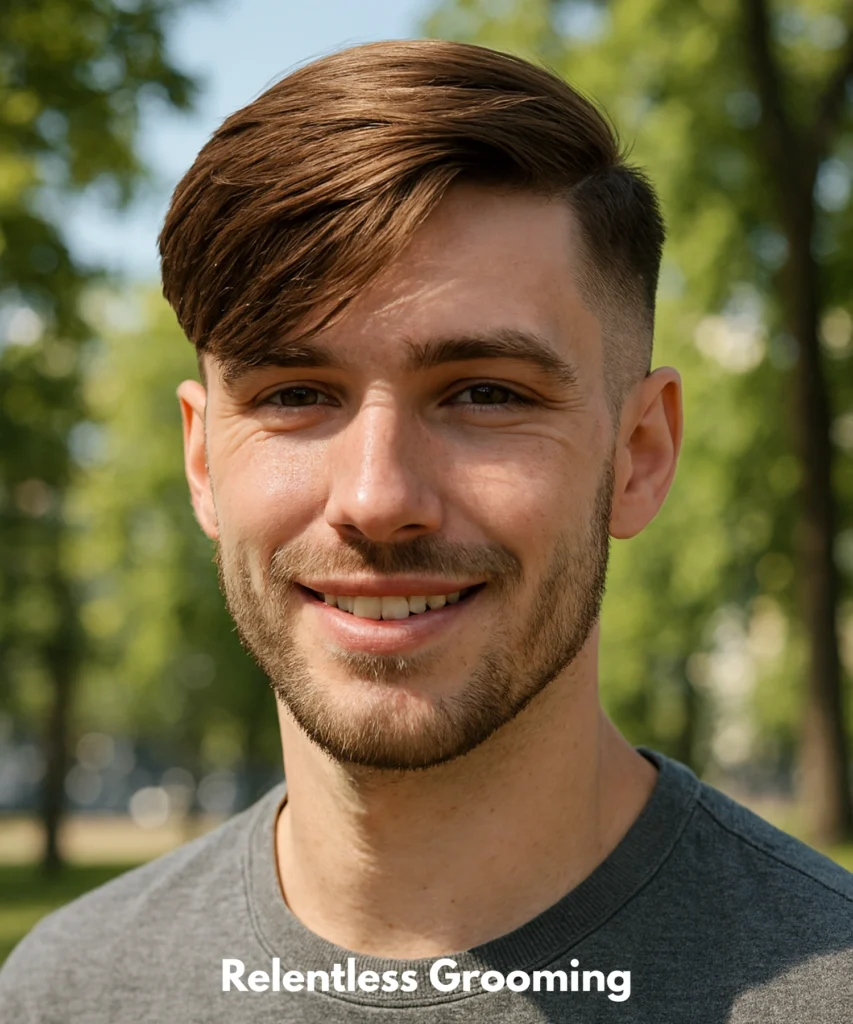
This is a modern take on classic suave. A long, heavy section of hair on one side is grown out and swept dramatically across the forehead, creating a strong diagonal line over a subtle taper.
Barber Instructions: Ask for a low taper. Leave significant length and weight on one side of your head (usually where your natural part is) so it can be styled as a dominant “sweeper” across your brow.
Product Tip: Use a medium-hold pomade or cream. It provides enough control to keep the long sweeper section in place and styled with a slight, polished shine.
12. Low Taper with Straight Slick Back
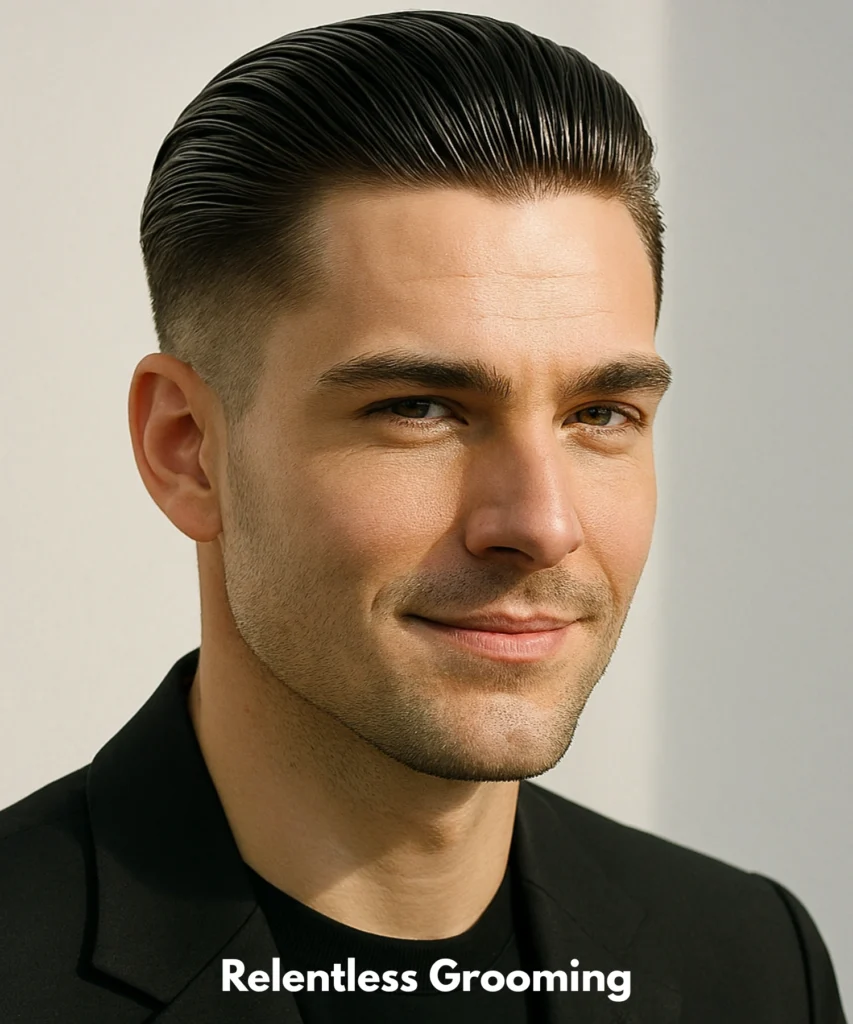
This style offers a sharp, graphic silhouette. The hair is grown to a uniform, medium length on top and combed straight back with no part, creating a sleek, glossy plane that highlights the face.
Barber Instructions: Ask for a low taper. The top needs to be cut to one consistent length (usually 3-4 inches) all over, with no layers, to achieve a smooth, uninterrupted, slicked-back flow.
Product Tip: Use a high-shine pomade or gel. Apply generously to damp hair and comb through meticulously from front to back for a wet-look, mirror-like finish.
Here’s what separates a good fade from a great one?
The difference between an average fade and an extraordinary one is in precision. The techniques and tools used by a master barber are what make it long-lasting.
- Technique Transition: A skilled barber knows the scissor-over-comb technique. Ke knows how to get top for controlled, precise detail. Then stitches to clipper blending on the sides.
- Tools & Process: They use a fade comb to guide the clipper. This is for ensuring a consistent guard line.
- The Result: This professional approach creates cleaner lines. It holds shape longer with softer transitions that look intentional. This is how a cut stays sharp as it grows out.
- Final Touch: When you pair the cut with a gel or pomade. The finished fade not only looks good but also looks effortless.
How to Ask Your Barber for the Right Low Fade Haircut?
Clear communication is the key to getting the haircut you want. Follow the simple steps to explain your preferred style to your barger.
- Start with a Visual Reference: Show a clear reference photo for asking for the haircut you need. This helps the barber to understand your desired style and length. Also, where the faith should start.
- Specific Key Details: Mention critical details like the fade level. Tell the top length you want and the neckline shape.
- Define the Fade Type: Make it clear you want a taper or a full fade to end confusion:
- Avoid Vague Requests: Never walk in and say you need a “Fade“. Skipping details or using unclear terms makes it harder to deliver your ideal look.
- Communicate For Perfect Results: Direct communication is the key. It makes sure the barber understands exactly what you want. This is how a perfect finish results.
Conclusion
In the last, the low taper fade haircut is not only trending on TikTok. But it’s the haircut that survives your daily commute. Whether a hard workout day or your nephew’s birthday party, it’s perfect to go without a mirror check.
You need to find a skilled stylist who understands your hair texture. And knows how to pick a fade that matches your actual morning routine.
Don’t forget the craft is in the hands of your barber. The real results last longer when the finish is done with prestige products. That’s the way for real fades and real results with no fuss.
FAQs About Low Fade Haircuts
What is a low fade haircut?
A low fade haircut begins just above the ears and gradually tapers hair shorter towards the neckline, creating a subtle, clean transition that keeps more length on the sides.
What is a taper vs fade?
A taper involves a very gradual, even shortening of hair length from top to bottom. A fade creates a more dramatic, shorter look that often “fades” to the skin for sharper contrast.
What looks better: high fade or low fade?
Neither is objectively better. A high fade is bolder and more dramatic, while a low fade is more subtle and versatile, making it a safer, more professional choice for many.
Who suits a low fade?
Low fades suit nearly everyone. They are versatile, work with all hair types (straight, wavy, curly, thick), and are ideal for professional settings or a polished, barbershop-fresh look.
What face shapes are best suited for a low fade?
Low fades are universally flattering but are often recommended for oval, round, and heart-shaped faces as they soften features and maintain balance without adding harsh contrast.